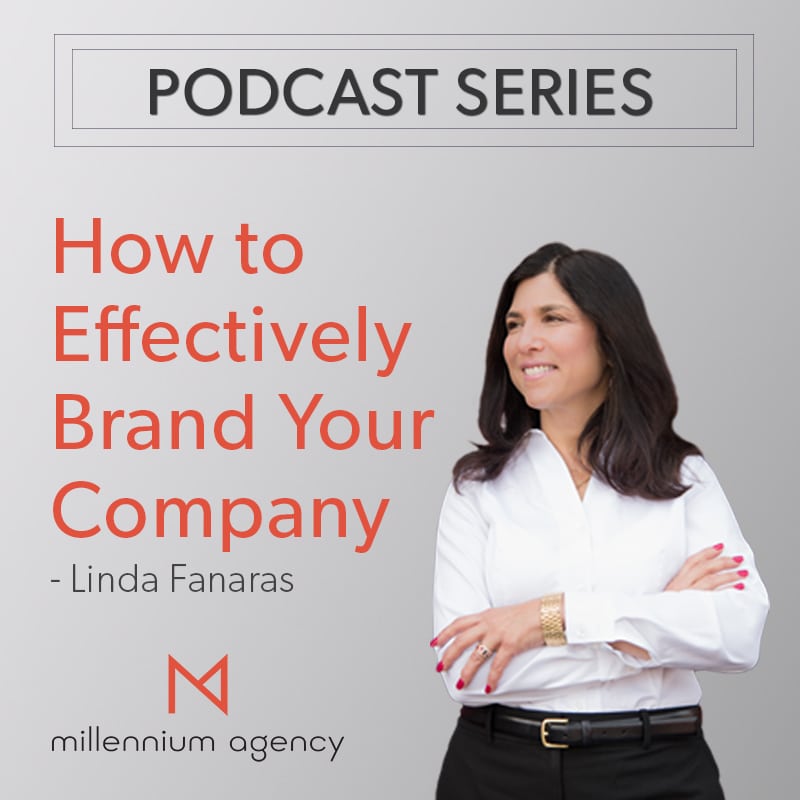
Learn about the importance of running a blog to increase your business’ website traffic and how to start one effectively.

Hi, my name is Linda Fanaras and I’m the president of Millennium Agency.

I’m here to talk to you today about blogs. So, blogging is a topic that has become more and more popular over the last several years. And one of the reasons that is, is it helps your website be found. Often companies feel as though if I write an article on widgets for example and I post that on my blog people will start running to my website and I will get all these leads. It doesn’t exactly work that way.

So, what you would like to do during this blog strategy process is to take a look at your company. What do you have to offer? How can you educate the market in a way that makes you an opinion leader in your space?

So, if you sell widgets for the automotive industry and they’re very unique you may want to write articles around that topic, not necessarily about your product or how great it is, but maybe how the industry is changing regarding widgets in the automotive industry and what’s trending. So, the way to go about this is, the first step is to do your keyword research. You really want to find out what people are searching for in your industry.

Once you establish the keywords, it will help you devise a plan for writing your blog. So, for example if we found out that widgets in the automotive industry help save lives what we would do is start to build out this blog content around the keywords that we’ve actually been able to run. So, if you are able to take a look at some of the tools that Google has to use you can go on to their platform and find out what the necessary keywords would be for writing a blog regarding this topic.

And once you are actually able to do that and determine what that is, you can start to build out this blog in a very systematic way. So, if you’ve ever written articles before you’ll want to have a good introduction. You’ll want to make sure the middle of the article is academic and educational and then you’ll want to close the article with a conclusion and summarize everything. Within the article you also may want to link to areas of interest where you can prove what you’re saying.

Maybe you’ll include one or two links to some key articles possibly there’s one in Widget News or Newsweek and that support your article, that also helps you build credibility within your blog.

Once you’ve done that, blogs can range anywhere from three hundred words to eight hundred to twelve hundred words. We like to see them anywhere from six to twelve hundred words. And often it’s much more effective if you can write a blog that’s educational, that has photos, that has engaging content, because you don’t want people to come to your blog and be completely bored and leave. So, the idea here is really to write a blog that is powerful, that’s interesting, that’s engaging, that keeps them on your website, so they keep coming back for more and use your website as a resource.

What we have found over the years with our customers is that if they write blogs in the most effective way, their prospective customers will come back to their website, read a blog, and then turn around, and actually fill out a contact form or make a phone call. So, this is the type of lead generation strategy you could put into place by writing blogs.

We like to see our clients write blogs once a month, all the way up to four times a month. We do a lot of blog writing for our clients. We are very specific as far as how we go about writing the blogs and what the most effective way is and how to track the success of those blogs over time. It’s not an overnight solution. It’s something that you have to invest in, and believe in, and continue to do over a period of time in order for it to be successful for your website. So, blogging today with some of the algorithms that Google has in place can be an extraordinarily successful way to help you generate inbound traffic.

It’s one of the strategies that we recommend as part of this process and we would definitely recommend it for you as well. So, I guess in summary what I would like to say here today is. You know if you’re thinking about writing a blog or if you’re thinking about engaging with a company to write a blog there are a couple steps that you need to keep in mind.

Number one, find out what your trending topics are. Number two, do your keyword research. Number three write engaging, clear, and concise content or work with an agency that can help you do that. Number four, post and post your blogs on a consistent and ongoing basis and over time this will help you accelerate lead generation and ideally sales in your company.

So, thank you today for joining me in this podcast regarding blogging. I hope it’s helped you consider blogging for the future and I wish you all the best.

Thank you.

In this episode, learn about the importance of crafting your business’ story to the specific news market you’re trying to get coverage in, and why a “one size fits all approach” doesn’t work.

Hi, this is Robb Atkinson. In this week’s episode of the podcast we’re going to be talking about how to get attention from a newsroom. And it’s a hard question to answer, especially if you don’t understand the newsroom you’re pitching to.

Now, I don’t know if you know this but there’s a revolution underway in how news is presented right now. You don’t believe me? Well, you should go check out what Tegna television stations are doing in your market. If you don’t have one, take a moment and Google them.

This is important because what works on a Sinclair station may be different than what works at a Tegna, Scripps, or even a Nexstar station. Each of these groups have their own editorial voice and it’s important for you to understand what that voice is. Now you may even have to craft different news releases to appeal to each of these stations. But I promise you it’s worth it.

So, once you decide how and what you’re going to pitch make sure that the event you’re pitching is newsworthy and has broad appeal. I can’t tell you how many times I’ve been in a newsroom where I received a press release that has nothing to do with about anything that’s happening in my community. The best way to get ahold of someone at a newsroom is still email.

It’s far and away the best way to communicate with someone and in fact if you can find one email that reaches all the people that you need to speak to, that’s typically the best way to go but don’t just send that one email to an editor and think your work is done. Take the next steps. Find out the editor’s name, call them, send them cookies, make a relationship. Think I’m kidding? I’m not.

When I was a news director, I’d often tell my reporters that if you want to strike up a relationship with someone at the police station the best way to do it is really go and meet that person on the desk who’s giving out the tips to the reporter. Bring them cookies; make a relationship. It’s just that simple.

Also apply this strategy–not only to the editor–but to a reporter that covers your area of expertise. Use this as an opportunity to create a relationship. Call them, meet them out for drinks, do something that builds trust. When the reporter calls, be ready to roll. Have your interviews ready to go. Create excitement. Offer exclusivity on a story.

I remember once I worked with a large communication company. We pitched a story that touted our most secret location. We offered exclusivity to a TV station and then we even made them sign an NDA, if they covered. It was the easiest pitch I ever made. The station in-fact teased that story for two days in prime time before they aired the segment in the six o’clock news.

And when you’re thinking about pitching these stories to a television station you have to remember to plan your event for a time that makes sense for local TV stations. Don’t schedule it for 6 p.m. at night and wonder why a reporter isn’t there to cover your event. It may be that they have other things to cover. Work with the assignment desk to find the best time to cover the event. And finally remember the first sentence in your email will make or break your coverage chances.

I’ve received thousands of news releases and almost all of them make the same critical mistake–they bury the lead. Nine out of 10 times, I immediately scroll to the bottom of the email where I find the most interesting part of the release. Remember, newsrooms aren’t coming up with story ideas. They’re pulling ideas from viewers and then showing the audience how and where they got them. They’re asking what viewers want and they’re trying to answer it. If you want to learn more about this week’s topic email me at [email protected].

We’d love to help you succeed.

Welcome to the podcast. Today we’ll be talking about how to brand your company. Branding your company is one of the most important things that you can do as far as establishing a very specific look and feel within your industry. Regardless of whether you’re a manufacturing firm, a technology firm, or any other type of firm, you want to have a unique look and feel–an emotional connection with who you are.

So, for example, if you have prospects out there that know your company name, you want them to have a specific image in their mind of who you are and what you represent. And having an effective brand is one way of helping you achieve that goal. One of the most important strategies that you can put into place when you decide you’re ready to develop a strong brand is to survey and do a little bit of research.

So, for example, you may take a look at some of your competitors, see what they’re doing and see how you stand up to them or how you can differentiate yourself compared to them. Another step that you can take is you can do some industry research and take a pulse of what’s going on in the industry and how you may stack up to that as well.

The third component of this which is very important is you can go out and do some surveys to your existing customer base or potentially your prospects. By conducting surveys, you can ask questions such as: how do they feel about your company, do you have great customer service, what are some of the characteristics that they think of when they think of your company?

And some of the things that you want to try to garner from these questions is the emotional connection that they have with your company. So, for example, let’s say you have just the most amazing customer service, someone calls you or sends an email, and within 15 minutes they get a response.

A good example is taking FedEx when they’re talking about being able to deliver overnight and they’ve established sort of some key messaging and then a look and feel. So, when you start to think about FedEx you know that you will get your delivery within the next day and it’s guaranteed. So, what you’re trying to do as you try to brand your company is, you’re trying to establish some messaging framework and you’re trying to build out a look and a feel that can resonate with prospective customers.

When you go through the surveying process, you’ll be able to figure out what makes you different. How are you different compared to others? How are you different compared to your competitors? And again, once you’re able to get that information, and you can put it into words in a very creative way, come up with some key messaging that will attract attention.

So, I like to use FedEx because they’ve been so successful with their overnight shipping guarantee. And it’s a very easy case study to remember but you actually have an emotional feeling when you think about FedEx. You feel good because you know that if you do business with them, they will get your package to where it needs to get to the next day. And that’s what you want to do with your company.

If we’re trying to break this down into a couple of components the first piece is to do your research, you want to take a look at your industry. What other companies are doing what your competitors are doing? The third piece. Find out how your customers feel about you what they believe your top characteristics and strengths are. And from that you can start to devise some key messaging, you can devise a look and a feel, and you can start to put those two components together in a very systematic clear and concise way.

Which means the third step of that is starting to integrate the graphical elements of your logo, your company letterhead, your trade show materials, your collateral with that key messaging and utilizing the key messaging and the look and the feel in a way that is clear and concise and can get your point across. And it’s very memorable.

So, at the end of the day what you’re trying to do is build an emotional connection with your audience. So, building that emotional connection using a unique selling proposition which could be part of your tagline is one way of achieving that.

In summary here what I would just like to reiterate is to establish a successful and powerful brand, your goal is to number one: do your research. Number two: start to build out a look and a feel, and key messaging, and number three: integrate all of those components into a strategy that you can execute into the marketplace to help you increase sales.

Once that’s done you will be able to accelerate the growth of your company in a very effective way. So, thank you for joining me today for this podcast on branding I hope it helps you and your company and have a great day.

About Millennium Agency

Millennium Agency is a national, award-winning, digital, creative, content/PR, and video marketing firm. With offices in Boston and New Hampshire, our team unites creative branding and data analytics to accelerate our clients’ growth, while combining our clients’ vision with our marketing expertise to increase sales opportunities and drive brand success. From video advertising and web design to social media and PR, Millennium can guide your marketing efforts every step of the way. Contact the professionals at Millennium Agency to learn more!

Linda Fanaras is the President and Founder of Millennium Agency located in Manchester, NH, and Boston. She can be reached at 877-873-7445 or [email protected].

With 2.38 billion active users per month (as of the first quarter of 2019), Facebook is the biggest social network worldwide and a highly effective social advertising channel. And, if you’re like many business owners, you may have started investing in social media advertising by boosting a post on Facebook. Perhaps you were the recipient of one of Facebook’s promotions for its boosted posts: “Get more likes, comments, and shares! Boost this post for $$” or “Claim your $$ credit now to boost your post to reach xxxx number of people.”

These promotions sound like a great deal. But thanks to the ever-changing Facebook algorithm, only a small segment of people will ever see your boosted post at any given time. But before you abandon boosted posts entirely, let’s examine exactly what boosted posts are and why they may or may not be worth your advertising dollars.

What is a Boosted Post on Facebook?

Boosted posts are paid content promotions that help you extend your reach across Facebook’s mobile and desktop news feed. To put it simply, they are a method of making your post stand out from all of the viral videos, photo shares, and status updates familiar to most Facebook users.

While you’re writing an update for your page, a little blue “boost post” button will appear on the bottom right of your post, prompting you to choose a target audience, the duration you want the ad to run for, and your total budget. You can also choose between two objectives. Do you want more engagement (likes, shares, and comments) or do you want to encourage people to visit your website? Note: this option is only available if your post contains a link.

Boosting a post is simple and quick—and available as an option for most of your older posts. Your content will likely reach more people than it would have organically, and it may also reach new people who are likely interested in your page or business but don’t currently follow you.

What is a Paid Advertisement on Facebook?

Paid ads are fully customizable promotions or product offers that businesses can create from the Ads Manager, Facebook’s targeted advertising platform. Using metrics such as gender, age, location, marital status, interests, and more, the Ads Manager allows you to the target specific people who are most likely to become your customers. These tools for customization and targeting also allow you to engage with your customers and track your campaign’s progress.

Facebook also gives its advertisers a choice of ad placement. While boosted posts can only appear in Facebook’s news feed, paid ads can appear in stories, messenger, marketplace, and the right sidebar. The full Ads Manager system also lets you choose marketing objectives such as store visits, brand awareness, conversions, and lead generation. And, if you decide to change anything about your ad, Facebook allows you to alter it at any time.

Facebook’s paid advertisement system relies on the auction model where businesses compete to show ads to their desired audience. Advertisers enter the auction by setting the amount they are willing to pay for an impression, action, or conversion from someone in their target audience. This amount is known as the bid. Advertisers can choose to have Facebook automate their bid or they can enter it manually to have more control over their costs.

After a bid amount is set and a campaign is scheduled to run, the Facebook Ads Manager offers a comprehensive tool for analyzing results. Here, you can separate campaigns by objectives and dates, and measure the performance of every single ad by cost-per-click, cost-per-conversion, impressions, unique link clicks, and more.

Conclusion

We’ve determined that Facebook ads offer more real estate and targeting options than boosted posts. They also offer more insights on campaign effectiveness so you can adjust your ads for a higher success rate in the future.

However, don’t discount the benefits of boosted posts. Remember, they’re quick and easy—and a great way to start becoming familiar with Facebook’s ad terminology and reporting features. Overall, they are less expensive than paid advertising and a great way to gain social exposure for existing Facebook posts.

Do you want to take advantage of everything that a Facebook ad campaign offers, but don’t have the time, social media savvy, or resources to do it yourself? Give the social media experts at Millennium a call. Our social media marketing plans help clients build social campaigns that increase lead generation and brand awareness.

About Millennium Agency

Millennium Agency is a national, award-winning, digital, creative, content/PR, and video marketing firm. With offices in Boston and New Hampshire, our team unites creative branding and data analytics to accelerate our clients’ growth, while combining our clients’ vision with our marketing expertise to increase sales opportunities and drive brand success. From video advertising and web design to social media and PR, Millennium can guide your marketing efforts every step of the way. Contact the professionals at Millennium Agency to learn more!

Linda Fanaras is the President and Founder of Millennium Agency (www.mill.agency) located in Manchester, NH, and Boston. She can be reached at 877-873-7445 or [email protected].

We recently published an eBook to help you get started with integrating video into your marketing strategy, and we can’t stress enough how powerful a tool video has become for marketers. According to a 2019 survey, 87% of businesses now use video as a marketing tool. Videos are a popular and persuasive way to learn how to do something online. How-to videos, also known as instructional or tutorial videos, are among the most widely watched on YouTube (and in all likelihood, if you’ve had a problem recently, you’ve looked up how to solve it on Google or YouTube). In North America alone, viewers watched more than 100 million hours of how-to content since 2015.

So, if you’re thinking of adding video content to your marketing strategy this year, why not make a how-to video? These videos are relatively easy to make and can be used by all types of businesses to demonstrate a product or to teach the viewer something new.

Planning Your How-To Video

Create buyer personas to segment your customers and provide valuable insight for your strategy. What questions or concerns do your customers or potential customers have about your products? What do they want to know about your industry or service? What solution does your product or service provide that you could demonstrate in a video?

Google Trends and Google Consumer Surveys can help you find answers to the aforementioned questions. A keyword finder, such as KeywordTool.io, can also help you learn about what your target customers are searching for online and what content you could create as a resource for them. Consider producing videos that:

  • Explain how to use your products and describe their features and functionality.
  • Demystify your services, especially if they are extremely technical.
  • Showcase happy customers explaining how to use your products in action.
  • Tell customers about your production process in a step-by-step format.

How-to videos can also be used for onboarding new employees, demonstrating new technology, or explaining new processes. Creating corporate tutorial videos that can be viewed multiple times saves time and effort—and videos are more engaging than traditional instruction methods. Studies show that 90% of information transmitted to the brain is visual, and visuals are processed 60,000 times faster than text.

Tips for Creating How-To Videos

Well-executed videos have the power to engage, entertain, and establish trust in a way unlike other content marketing channels. After you’ve determined your topic and outlined a plan, use the following tips to create an effective video:

  • Keep your video short and to the point. According to Hubspot’s research, the recommended time for social videos are 2 minutes for YouTube, 1 minute for Facebook, and 45 seconds for Twitter.
  • Avoid jargon and speak directly to your audience. Adding humor and sincerity will help make your video more personal, memorable, and entertaining.
  • Apply your brand’s voice and tone to your video. Establish brand consistency throughout your marketing channels.
  • Explain any technical terms or confusing subjects—don’t assume that your viewers have any prior knowledge.

Once you’ve created a dynamic and engaging video, feature it prominently on your website, share it on social media, and incorporate it into your email campaigns. You can also embed the video into your blog posts and product or service pages.

If you have any questions about creating a how-to video or want to learn more about how online video marketing can help your business, contact the video marketing team at Millennium Agency today.

About Millennium Agency

Millennium Agency is a national, award-winning, digital, creative, content/PR, and video marketing firm. With offices in Boston and New Hampshire, our team unites creative branding and data analytics to accelerate our clients’ growth, while combining our clients’ vision with our marketing expertise to increase sales opportunities and drive brand success. From video advertising and web design to social media and PR, Millennium can guide your marketing efforts every step of the way. Contact the professionals at Millennium Agency to learn more!

Linda Fanaras is the President and Founder of Millennium Agency (www.mill.agency) located in Manchester, NH, and Boston. She can be reached at 877-873-7445 or [email protected].