
The driving force behind every branding campaign is the audience persona, and effectively targeting it is key. Your audience persona is essentially the characteristics and behaviors of your ideal audience. More specifically, it is who you want to sell to. Your target audience, on the other hand, is the umbrella term used to describe a group of different audience personas that your brand markets to. Multiple companies can have the same target audience, but your audience personas could be different based on preferences, behaviors and attitudes. Let’s talk about how brands create target audiences:
How Target Audiences Form
Your target audience is the market segment you want to attract and sell to. Target audiences typically vary from industry to industry, and within those niche audience groups are even more narrow audiences that favor specific products or services.
The best way to determine your target audience is by conducting thorough research into the market and understanding the needs and identities of your potential and current buyers. This research is conducted via surveys and following up with customers to gain insight into their experience with your company.
When forming your target audience, you should ask yourself some of these questions:
- What consumer need does my brand meet?
- Who is likely to desire my products or services?
- What does my brand offer consumers that the competition does not?
Although you may have a general understanding of the answers to these questions, diving deeper into your brand’s core identity is the best way to formulate your ideal audience persona. Your target market is more general, and could consist of groupings such as:
- Age
- Gender
- Sexuality
- Education status
- Physical location
- Religious affiliation
- Relationship status
Because these groupings are so broad, you and your competition’s target audiences will likely overlap to some degree. This is why it is crucial to conduct thorough market research when establishing exactly who your target audience is and the personas that exist. Your brand’s target audience may not have a direct classification for every single one of the above categories or groupings. Still, the more you know about your target audience, the more successful you will be at engaging them in a way that grows your brand.
How Audience Personas Dive Deeper
They Humanize Your Customers
Unlike your target audience, which is broader and can be shared among industry competitors, your audience persona is unique to your brand. Your audience persona essentially humanizes your customers in order to help you successfully meet their needs. Being able to provide and understand market data to maintain your audience persona allows you to understand how and why certain aspects of your brand do or do not do well. By humanizing your audience, you can better understand and meet their needs, and use these insights to increase your brand awareness.
They Take Advantage of Market Research
When forming your audience persona, focus on the concrete, collected market data. Avoid generalizing or making assumptions about your audience. You want to specifically look closely at who they are and what their needs are. For example, if you know that your brand aims to be preferred by “women in their mid- to late twenties who work in the retail industry and have an interest in fashion,” you are going to be able to market your brand and its offerings with more success than if you were to aim for “adult women” in general. Companies can aim to sell to various demographics for any number of reasons. However, market research informs your brand about your ideal audience and allows you to pinpoint and reach your brand’s unique audience persona more effectively.
They Help You Better Understand Your Audience
A major component of your audience persona is also your targeted audience’s habits. Being able to pinpoint which members of the overall audience are going to be specifically interested in your brand’s offerings presents you with a leg up in the market. You want to imagine the person behind the choices and try to understand the thought process that goes into their selection process when they are selecting where and who to do business with. The audience persona is so much more than the general makeup of your consumers, it is the core identity which drives their decision-making processes.
Benefits of a Distinct Audience Persona
Saves Time and Money
Establish a distinct audience persona for your brand to maximize your efforts. Being able to present your brand to the right audience in an efficient, streamlined way saves you big when it comes to time, and the overall return on your investment into branding efforts. Understanding your audience persona from the start of your brand also prevents the need to return to the drawing board. Instead of hitting the market and adjusting your brand as you go, anticipate and understand those needs ahead of time. This positions your brand as “in touch” with its audience and the current state of the market. The resulting market perception for your brand makes it clear what your brand does and who it is for.
Increases Customer Loyalty
An audience persona can also prove helpful to brands when it comes to generating and maintaining customer loyalty. Demonstrating that you understand and aim to solve your consumers’ problems goes such a long way. The right audience persona can also inspire trust among your consumers. Present your audience persona clearly and reflect it throughout your brand to allow potential and current customers to fully grasp what you can do for them.
Helps Grow Referral Marketing
In addition to consumer trust, having a distinct audience persona helps your brand grow in multiple ways. When consumers have a clear picture of who your brand is for, not only are they able to consider whether your brand is right for themselves, but they are more likely to refer it to others. Your audience persona should be clear enough that when consumers see it, they can tell right away “this brand is for ___.” From there, it should resonate enough that if the initial audience is not interested, your brand will remain in their mental library when it comes to referring others. Referrals are one of the best kept marketing secrets that require little investment beyond the setup, but have the potential to bring in measurable success, in fact a successful referral program within B2B marketing has a 78% chance of generating positive leads for your brand. Being able to establish your unique audience persona from the start of your brand means that all your marketing and branding efforts will be as efficient and productive as possible, reducing the margin of error for failing to meet the correct target audience.
Potential Audience Persona Challenges
Although the benefits of a strong audience persona can result in brand success, there are several ways in which neglecting it can do more harm to your brand than good.
Becoming Irrelevant
As you know the purpose and role of your audience persona is to effectively guide all branding and company decisions. Just as your brand evolves to offer new services and products, your audience persona will also need to evolve. You want to avoid the common mistake of trying to keep your audience persona too broad. Your target audience can remain broad, but tailor and adjust your audience persona as your brand moves forward. Your brand’s audience persona is not going to be what it was five years ago – not updating it as your brand grows can result in your brand becoming irrelevant.
Negative Market Perception
It is one thing for your brand to not have ENOUGH market perception surrounding it, especially at the beginning. But a NEGATIVE market perception means that the market is aware of your brand – it is just not doing well. An unmaintained audience persona can result in a negative market perception for being outdated, inaccurate, too broad, too specific, and too generic, to name a few. Use market research and consumer breakdowns when crafting your audience persona. Otherwise, your brand is sure to fall short of the mark. You are not going to appeal to the correct audience or reach those who have a need or desire for your brand if you cannot create a positive perception for your brand.
Decreased Leads and Loyalty
An unpolished audience persona can cause your brand to see a decrease in leads and customer loyalty. Why? Simply because your target audience does not identify with your brand. When there is no driving force to make people excited about connecting with your brand, there is nothing that indicates your brand is worth considering. Remember: a refined audience persona draws potential customers in and retains their loyalty. An unclear and unpolished audience persona can generate uncertainty and unenthusiastic client reviews. Make sure your audience persona is refined. This will help draw in business and showcase what you can do, rather than generate brand confusion and sabotage sales growth.
Putting Words into Action
Every single brand has a target audience, and those target audiences tend to be more generic and industry specific. In contrast, your audience persona is custom crafted for your brand and its services or products.
A polished audience persona will drive your brand towards considerable growth, but it won’t happen on its own. You need to constantly update and refine your audience perception. Communicating who your brand aims to engage makes it easier for your clients to find and interact with you. This promotes confidence for potential and future clients – confidence that you are the right brand for them.
Develop a well-crafted audience persona and keep it updated. This will help you reach and engage the right audiences for your brand and highlight what you have to offer. If you are unsure of where to begin when it comes to understanding your audience persona, consult a professional branding firm. Working with professionals that have the audience persona process down to a science is the best place to begin. An experienced agency can help you understand your target audience and pinpoint your brand’s precise audience persona to build growth.
About Millennium Agency
Millennium Agency is a national, award-winning boutique branding, messaging and strategy marketing firm for the software technology and manufacturing sectors. A top-led women-owned business, we take your brand and vision seriously and build a strategy that drives brand success. Our expert team unites creative branding, storytelling and data analytics to accelerate your business growth. With offices in Boston and New Hampshire, and a worldwide presence, the professionals at Millennium Agency would like to learn more about your business.
Once your SEO has gotten eyes on your page, how do you convert this audience? Emotional messaging keeps eyes on the page and generates click-throughs. SEO is useless without quality content that keeps leads engaged and wanting more.
The Benefits of Emotional Messaging
Customers respond to content that is competent and empathetic. Empathy is crucial to converting leads into clients. Certainly, customers want to know what you are thinking, but more than anything, they want to you to know what they are feeling. If you can communicate that you understand their pain, customers will trust your solution.
Keep Them Scrolling
The chief benefit of emotional messaging is that it increases the time spent on your site. By capturing the emotions of your prospects, your content becomes personal. Potential clients will see themselves in the stories you tell.
People love being recognized. Emotional messaging honors the plight of your clientele. When designing your content, develop a profile of your target audience. What are the things that cause them affliction? These are the things you will want to target with your messaging.
Humanize Your Brand
Humanizing your brand with a personality is a necessary step to creating your brand identity. By appealing to your prospects’ emotions, you communicate that you don’t just sell products, you solve problems.
Brand loyalty is no different than loyalty to one’s friends. It is earned through emotional bonding, mutual aid, and shared struggle.
Convert Your Leads
People love to feel heard. If they feel that your brand hears their needs and wants, they will be more likely to trust your solutions. If they trust your solutions, they will click through and buy.
When you develop your messaging, ask yourself some questions. What problem am I trying to solve? How does this problem make people feel? Craft your emotional messaging around the answers to these questions.
Opportunities for Emotional Messaging
One of the most difficult parts of emotional messaging is knowing how to include it. Often, we are tempted to explain our business by telling people what we do. Emotional messaging demands that you show rather than tell.
Tell a Story
The easiest way to inject emotional messaging into your content is to tell a story. Explain how the problem you are solving arises. Create a composite character from customer testimonials.
Everything that your business does is a story. How was your business founded? What obstacles have you encountered along the way? How have you gone above and beyond for your customers? All of these make great story prompts for emotional messaging.
Describe a Problem
Another way to incorporate emotional messaging is to describe a problem that your business solves. We often do this in our messaging without even giving emotion a second thought.
It is easy to forget that your product changes how people feel. When describing the problem you solve, think about how it makes people feel. When describing your solution, describe how people feel afterwards.
Trigger a Memory
Sometimes, it is not even necessary to spell out the emotions your prospects feel. If your problem is common enough, the right phrase can be enough to trigger a memory of your problem.
Nissan took advantage of this with their 2020 Sentra commercial. The commercial centered around a disappointment felt by numerous women across the country, “We’re going to hold off on promoting you this quarter.” For this, Nissan’s ad campaign was branded #relatable by Swaay magazine.
Choosing the Right Agency
Creating accurate buyer personas is the first step to effective emotional messaging. Buyer personas often require intensive research best handled by a professional marketing agency. Millennium Agency is an award-winning marketing firm based out of New Hampshire with clients across the country. Contact us today for a free consultation.
About Millennium Agency
Millennium Agency is a national, award-winning, digital, creative, content/PR, and video marketing firm. With offices in Boston and New Hampshire, our team unites creative branding and data analytics to accelerate our clients’ growth, while combining our clients’ vision with our marketing expertise to increase sales opportunities and drive brand success. From video advertising and web design to social media and PR, Millennium can guide your marketing efforts every step of the way. Contact the professionals at Millennium Agency to learn more!
Email is still one of the most effective ways to reach your customers. According to DMA Insight, 99% of consumers check email daily. However, 80% of people don’t read the emails businesses send. According to MailChimp, the average email open rate across all industries is only about 20%.
The subject line of an email is the most important line of text people see when they receive your email. This one line can often determine whether an email is opened or sent straight to the trash, so make sure it’s optimized for your audience.
Spending a little extra time on your email subject lines will help you increase email open rates, avoid emails going to the spam folder, and get your message in front of the right people. Review these 7 tips below for tweaks you can make when writing your email subject lines.
1. Avoid Spam Triggers
The words you use in email headlines can have a big impact on whether people even see your email — over 20% of emails never make it to their inbox because they get flagged as spam. Phrases like “get paid”, “make money”, and “you are a winner” are just some of the culprits.
2. Use Action Words
An email subject line is a bit like a call to action. It’s your first chance to get recipients to open your email. Using action words can speed up the process. Some examples are:
- Automate your most common admin tasks.
- Save an hour a day on data entry.
- Get 10% off web hosting.
For best results, include those words at the start of the email headline.
3. Master the Psychology of Recipients
There are a whole bunch of things the human brain is wired to respond to. Use one of these psychological triggers in your email marketing, and you’ll get more people opening your emails. It’s practically guaranteed.
For example, you can ask a question to inspire curiosity just like these below headlines:
- We’re doing a presale — can you help?
- What’s the most annoying software bug you deal with?
- Is your company’s security system up to date?
4. Keep Your Subject Lines Short
These days, preferred subject lines are short. That’s because mobile devices are now primary devices for checking emails. If you have a long headline, you risk having it cut off when people view it in their email app.
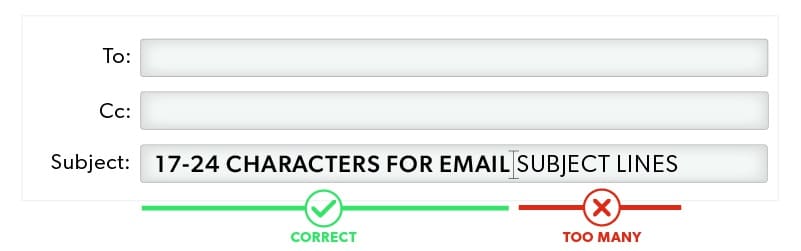
This is also why you should put the most important part of your email headline near the front; it ensures that every recipient knows what your email is about. A roundup of several studies says 17-24 characters works best for the mobile market. Of course, you can go longer if your audience connects via laptops and desktops.
5. Take the Personal Approach
Many business owners try too hard to be everything to everyone. While it might seem counterintuitive to leave any audience out of your marketing efforts, the fact is you’re bound to have more success when your messages address the specific needs and pain points of a targeted audience. For marketers in the technology industry, a good place to start is to think of all the features of your products and identify which audiences/users are likely to be more interested in one feature over another.
6. Write Multiple Options
Most professional marketers write multiple headlines before choosing the best one. Start with the ones that describe the content of your email, then expand. Don’t be afraid to try headlines with humor, puns, and some that are completely off the wall. The point is to get creative juices flowing so you get a couple of headlines you’ll actually want to use.
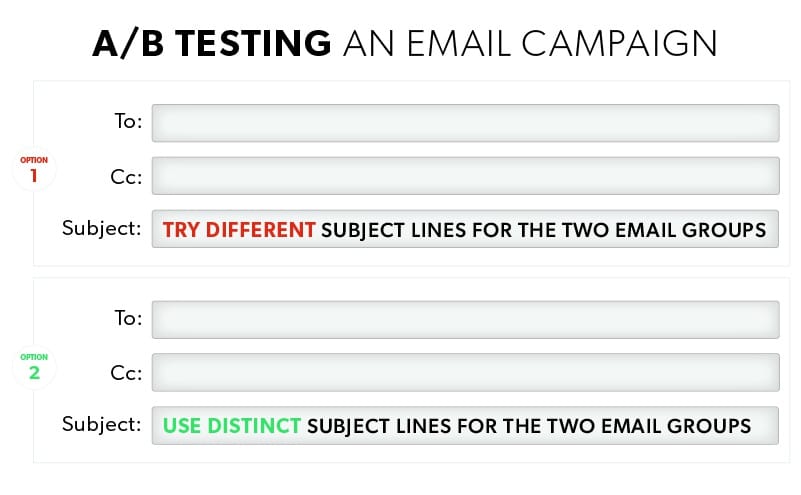
Once you’ve got your headlines, test the best ones. Most email marketing software comes with an A/B testing tool that will send different headlines to random sets of recipients, so you can figure out what headlines get the best open rate. Over time,
you’ll be able to use the most successful ones as templates to create even more successful email headlines.
7. Troubleshoot Issues
If you’re trying to counteract falling open-rates, working on your subject lines can help, but there may be other factors at play. Make sure you address each of the below issues in conjunction with improving your subject line copy.
- Is the email viewable? If your email doesn’t read well on a user’s device, they won’t bother trying to decipher it.
- When did you send it? Many people don’t check their emails as often on the weekend. Check out our piece on the best times to send an email newsletter for more guidance.
- Quality of your email list. Is this a solid, targeted email list? Your open rates will likely reflect the quality of your email list.
There’s a lot of noise online, and the same is true for our inboxes. If you’re lucky, you only receive a dozen or so emails a day in your personal inbox. But for everyone else, it’s likely that the daily inbox number is over 100 emails.
In other words, you’ve got a lot of competition when it comes to standing out in someone’s inbox. But, with the right subject line, your email will stand out in the crowd. With these tips in mind, you’re ready to write good email subject lines that will get your emails the attention they deserve.
About Millennium Agency
Millennium Agency is a national, award-winning, digital, creative, content/PR, and video marketing firm. With offices in Boston and New Hampshire, our team unites creative branding and data analytics to accelerate our clients’ growth, while combining our clients’ vision with our marketing expertise to increase sales opportunities and drive brand success. From video advertising and web design to social media and PR, Millennium can guide your marketing efforts every step of the way. Contact the professionals at Millennium Agency to learn more!
Email remains a reliable, convenient way to send out your tech company’s latest announcements and engage with your audience. And yet, it still comes with one major issue: new subscribers only see new emails from your company, and never receive information you’d sent before they even signed up.
This issue has created a predicament for businesses. Email drip campaigns offer a solution.
What is an Email Drip Marketing Campaign?
To put it simply, email drip campaigns are sets of marketing emails sent out automatically on a schedule. Mail Chimp defines them as a series of automated emails sent to people who take specific action. For any given action, you can choose how many emails to send and the rate at which to send them. These emails can be personalized with data like contact information and specific references to an action the person took.
Drip campaigns have a few defining characteristics which makes them a powerful marketing tool. The content is usually:
- Prewritten and automated
- Sent on a preset schedule based on audience action
- Mapped to important engagement points
How Does an Email Drip Marketing Campaign Work?
According to Business News Daily, email drip campaigns are simple and easy to use. First, you’ll set a trigger, such as a user abandoning their online cart or signing up for your email newsletter. Next, a prewritten email will be sent automatically to your users who take that action. Finally, you can segment your email list however you see fit and assign different triggers to different groups to make sure your email content is specifically targeted.
Some of the many types of drip campaigns include:
- Welcome emails
- Onboarding emails
- Shopping cart abandonment
- Subscription renewal
Why Would Your Tech Company Benefit?
According to research from email marketing software provider Emma, targeted emails produce 18x more revenue than non-targeted emails, since users are more likely to click the links in the emails. Email drip campaigns produce a 119% increase in click-through rates over regular campaigns. According to email marketing automation platform Automizy, “Email drip campaigns can help you guide your leads into your sales funnel and show them how to use your product. The key to making the ideal drip is to customize it according to your industry and business needs. This way you will be able to optimize it based on your target audience’s needs and behavior.”
Mail Chimp believes drip campaigns are so effective because they are targeted, meaning they’re based on a specific action and can be personalized. More than 90% of consumers say they’re more likely to buy from companies that recognize and remember them. Tech companies must utilize these findings strategically because gaining trust from your customers is not always easy.
Email Drip Campaign Best Practices
Forbes recommends that your tech company not use every interaction with a customer to sell product. Rather, the best way for tech companies to sell anything is by showing their customers that they matter. Targeted email drip campaigns are an easy, effective way to do so.
“All of your marketing should subtly inspire trust in consumers,” said OptinMonster co-founder, Thomas Griffin. “For instance, in an email marketing message, you can remind consumers how their data is being used. These subtle reminders will help consumers trust your company with their data and demonstrate to them that your business is transparent and authentic.”
Email drip campaigns offer several other benefits to your tech company, including boosting your customer engagement, increasing product sales, promoting content, nurturing leads and increasing brand awareness. If your tech company needs help starting a drip marketing campaign, reach out today!
About Millennium Agency
Millennium Agency is a national, award-winning, digital, creative, content/PR, and video marketing firm. With offices in Boston and New Hampshire, our team unites creative branding and data analytics to accelerate our clients’ growth, while combining our clients’ vision with our marketing expertise to increase sales opportunities and drive brand success. From video advertising and web design to social media and PR, Millennium can guide your marketing efforts every step of the way. Contact the professionals at Millennium Agency to learn more!
Email is still one of the most effective ways to reach your customers. 99% of US consumers check email daily. However, 80% of people don’t read the emails businesses send. Can your tech company increase email open rates simply by writing attention grabbing email headlines? When crafting email subject lines, there are proven ways to make your message more effective.
Optimize Email Headlines for the Right Tech Audience
The subject line is the single line of text people see in their inbox when they receive your email. This one line of text can often determine whether an email is opened or sent straight to the trash, so make sure it’s optimized for your specific tech audience. Spending a little extra time on your email subject line will help you increase email open rates, avoid emails going to the spam folder, and get your message in front of the right people.
Use Action Words
An email subject line is a bit like a call to action (CTA). It’s your first chance to get recipients to open your email. Using action words can speed up the process. Some examples for your tech company could include:
- Steal our security tips
- Create easy tech solutions
- Increase mobility of your workforce by 20%
For best results, include these CTAs at the start of the email headline.
Keep Subject Lines Short
These days, the best email headlines are short. That’s because mobile devices are now the primary resource for checking emails. If you have a long headline, you risk having it cut off when people see it in their email app. If you keep your subject line short, then you won’t need to worry about how much is visible to the recipient. A recent study found that email subjects with six to ten words are the most likely to be opened. That’s also why you should put the most important part of your email headline near the front; it ensures that every recipient knows what your email is about.
Be Personable
The same study also showed that more people are likely to open emails with their name in the subject line compared to those without their name. Email recipients are also less likely to click on email subjects with the word “newsletter” in the subject line and the notation of “FW” for forward in the headline. Try writing a subject line that directly addresses the reader, maybe even with a question like “Worried About Data Breaches?” Tap into their humanity and remind them that you’re a person, too.
Overall, when writing email subject lines, it’s best to be clear and concise about what the reader is going to get when opening your email. Be creative, but truthful, and you will see open rates soar! If your tech company needs help writing attention-grabbing email headlines, reach out today.
About Millennium Agency
Millennium Agency is a national, award-winning, digital, creative, content/PR, and video marketing firm. With offices in Boston and New Hampshire, our team unites creative branding and data analytics to accelerate our clients’ growth, while combining our clients’ vision with our marketing expertise to increase sales opportunities and drive brand success. From video advertising and web design to social media and PR, Millennium can guide your marketing efforts every step of the way. Contact the professionals at Millennium Agency to learn more!
There is no denying that SEO is ever-changing, largely due to the algorithm changes that Google rolls out regularly. This means your content marketing strategy has to be flexible and willing to adapt to the ever-evolving nature of SEO.
Why the Dynamic Nature of SEO Is an Opportunity, Not a Problem
The dynamic nature of SEO means does create new challenges for content marketers, but it also means plenty of opportunities for those who want to be successful in this field.
The evolving nature of SEO means that businesses that previously ranked higher may be dethroned if your content marketing strategy is on point. It’s all about adapting to the situation, seizing on opportunities, and making the most of the changes that Google introduces.
Why Old SEO Strategies Don’t Work Anymore, Why Some Always Will
Despite the hundreds of updates and tweaks Google makes to its algorithm every year, some SEO practices are still valid and will remain so. For instance, quality content will always be crucial. Search engines are designed to solve problems and answer questions.
If your content does that for the users, i.e., it is educational and helpful, it will be ranked higher. On the other hand, some old SEO practices have been rendered redundant and are no longer effective.
For instance, some link-building techniques are being penalized by Google, and it’s no longer considered good SEO to do them.
What This All Means For Your Content Marketing Strategy
The ever-changing nature of SEO means that your content marketing strategy also needs to evolve and adapt to these changes. You simply cannot be doing what worked five or even one year ago and expect the same results.
It’s important to work with a content marketing agency that understands this and stays up to date on the latest SEO practices.
About Millennium Agency
Millennium Agency is a national, award-winning, digital, creative, content/PR, and video marketing firm. With offices in Boston and New Hampshire, our team unites creative branding and data analytics to accelerate our clients’ growth, while combining our clients’ vision with our marketing expertise to increase sales opportunities and drive brand success. From video advertising and web design to social media and PR, Millennium can guide your marketing efforts every step of the way. Contact the professionals at Millennium Agency to learn more!
A way to captivate prospective customers, build engagement and trust – video advertisements do it all. Sticking to just still images in your media campaign can mean that prospective customers just look past your business entirely. About 45% of people watch more than one hour of Facebook or YouTube videos a week – target that 45% with video ads!
Here’s what else video ads can do:
Get Your Point Across
Video advertisements allow you to convey more information to your audience than still images. This information will also be more easily absorbed, and your message will get across more quickly than if you were to add lots of copy to a still image – where you’re more likely to lose your audience’s interest. Video ads allow more information to be conveyed in an effective and efficient manner.
Increase Engagement
It’s probably not too surprising that video ads receive more engagement than image ads alone, but it’s still worth mentioning. Your prospective customers are more likely to stop scrolling when they come across a moving video ad than a simple picture. Since these kinds of ads get noticed more, it increases their engagement. Pro tip: add a call-to-action at the end of the video so your prospective customers know just what to do!
Building Trust
As we continue to move into targeting more Millennials and Gen Z – there are certain practices that bode well with these generations. Millennials and Gen Z look for authenticity and transparency when choosing their favorite brands. They want a business that they know, like and trust. Video ad campaigns allow a more personalized platform to educate your business’s target audience on what you do and who you are. Video ads allow for a more authentic connection to be built in a shorter amount of time and can help showcase your brand’s unique personality.
Get Ahead of the Competition
Prospective customers want to know what makes you different from the competition – with video ads you can stand out. By creating high-quality video ads, you will significantly differentiate your brand from your competitors. Video creation, production and execution takes a long time and a lot of work so many brands opt out of it. However, video ads are a growing trend so get ahead now!
The Perfect Blend of Videos and Images
Both images and video ads, if executed well, can coexist in the same platform and generate high-quality leads. Since video ads take longer to execute than still images, plan ahead about what you want to accomplish and when you want to advertise. Let the still image advertisements fill in around your video.
If you’re interested in creating video ads for your business but don’t know where to begin – contact us today and we’ll help you get started. Our team of marketing experts can help your brand develop, create, and execute an effective video advertisement.
About Millennium Agency
Millennium Agency is a national, award-winning, digital, creative, content/PR, and video marketing firm. With offices in Boston and New Hampshire, our team unites creative branding and data analytics to accelerate our clients’ growth, while combining our clients’ vision with our marketing expertise to increase sales opportunities and drive brand success. From video advertising and web design to social media and PR, Millennium can guide your marketing efforts every step of the way. Contact the professionals at Millennium Agency to learn more!
An effective employee onboarding program is an essential strategy for a successful business. In fact, new employees are 69% more likely to remain with a company when they are onboarded successfully. Most often, onboarding employees and integrating them into the company culture and workflow is the responsibility of human resources and managers, who are frequently busy with their own day-to-day operational responsibilities. Video training and onboarding videos can optimize employee orientation by saving time, inspiring new employees, and allowing for self-paced learning.
Video also helps reduce the cost of onboarding. By creating a library of onboarding videos, companies can eliminate the need for managers, colleagues, and human resources trainers to spend additional time repeating basic information. There are several types of onboarding videos commonly used to improve engagement and train new employees.
Corporate Biography Videos
People connect to stories, not companies. An effective corporate biography video that utilizes storytelling as a branding and marketing strategy will captivate, inspire and engage employees on an emotional level. Corporate biography onboarding videos can be narrated by the CEO or other key personnel and detail the company’s history, beliefs, culture, activities in the community, and mission.
Day-in-the-Life Videos
Day-in-the-life onboarding videos can educate new employees on roles, responsibilities and dynamics. They might feature a current employee introducing new hires to various staff within a department and performing their duties. Day-in-the-life videos can also show how different departments operate and authentically interact with each other, helping new employees to imagine themselves in each setting and feel more connected to the company.
Screencast Tutorial Videos
Successful tutorial videos break down tasks into step-by-step instructions. Screencast tutorial videos allow managers to create videos from their screens that demonstrate how to use company software or other computer programs. These onboarding videos get right to the point—without any introduction at all—because they are meant to get users started immediately, enabling them to utilize and understand the benefits of the platform quickly.
Screencast tutorial videos also allow for self-paced learning; they can be paused, repeated, and even referred back to by employees at any point.
How-to Videos for Company Policies and Procedures
How-to videos are among the most-watched category on YouTube, and are ideal for showing new employees how to perform common tasks. Simple how-to videos can demonstrate how to use the internal phone system, conduct video conference calls, schedule a meeting room, order business cards, and more.
Role-Playing Videos
Role-playing videos are ideal for teaching soft skills such as managing difficult conversations, accepting feedback, resolving disputes between colleagues, and other types of office or customer service etiquette. Role-playing videos feature short video clips of situational problems—most often using current employees as role-playing actors—to show new hires the types of interactions that will be part of their job and the ideal response to each interaction. Sometimes these videos include text, images, and even quizzes to offer viewers different options and keep them engaged.
Interactive Videos
Interactive videos give new employees more control over their learning experience. By allowing viewers to click, swipe, scroll, and type within video content, employers can create a more exciting and unique video experience. The most common interactive elements of onboarding videos are video quizzes, which help reinforce key concepts, improve knowledge retention, and confirm comprehension.
Viewers retain 95% of a message when they watch it in a video compared to 10% when reading it in text. In addition to providing an optimal platform for learning and knowledge retention, onboarding videos are motivational and create strong connections between new employees and the company. An inspiring company culture or biography video can help employees feel a part of something bigger, something that they want to continue to be a part of.
Trust the experienced video production team at Millennium Agency to produce an onboarding video that will communicate your company’s mission and values to new hires in an engaging way. Contact us today to discuss how we can help you plan, create, and produce an onboarding video that will help your company save valuable training time and retain future employees.
About Millennium Agency
Millennium Agency is a national, award-winning, digital, creative, content/PR, and video marketing firm. With offices in Boston and New Hampshire, our team unites creative branding and data analytics to accelerate our clients’ growth, while combining our clients’ vision with our marketing expertise to increase sales opportunities and drive brand success. From video advertising and web design to social media and PR, Millennium can guide your marketing efforts every step of the way. Contact the professionals at Millennium Agency to learn more!
Linda Fanaras is the CEO and Founder of Millennium Agency (www.mill.agency) located in Manchester, NH and Boston. She can be reached at 877-873-7445 or [email protected].
Video is one of the best ways of selling a company or organization to potential new hires. The visuals and information you share in a recruiting video will show, rather than tell, prospective employees about your company, and let them have an inside look into where they may be working.
Video is becoming one of the most consumed forms of content. People are now watching billions of hours of video daily on platforms like YouTube and Facebook. With more and more people watching video online than they were a year ago, using video as a method to attract top talent and market your company is a strategy that should not be overlooked. In a recent study, CareerBuilder found that job postings with video icons are viewed 12% more than postings without video, and that companies receive a 34% greater application rate when they add video to their job postings.
A thoughtful and compelling recruiting video gives your company a personality. It’s also a way to share your company’s culture and environment with potential new hires. It can make your organization stand out and inspire people to want to be a part of it. To help get you started, we’ve put together a few tips to produce recruiting videos that prospective employees will love.
Define Your Goals and Plan Your Content
Identify what your video will focus on. Do you need to make a general recruitment video about your company to add to every job posting? Or do you want to highlight a department within your organization? A general recruitment video should share your company culture, while a department-specific video might feature employee testimonials and a day-in-the-life of an employee of that department. You may discover that you need to make a series of videos that each feature a specific department or geographic area as well as a general company culture video.
Share What Makes Your Company Unique
The most talented employees have lots of options of where they are going to work. Find a way to show how your company is different from the others they are considering. Do you promote volunteerism or are you involved directly with any philanthropic organizations? Do you offer tuition reimbursement? Do you have any special company outings or events? Incorporate whatever it is that makes your company unique in your recruiting video messaging.
Feature Your Employees and Customers
Turn the microphone over to your employees and customers. Highlight relatable employees from different geographic locations and backgrounds. By featuring a diverse group of people, you are helping prospective candidates envision themselves working for your company in similar roles.
Ask Thought Provoking Questions
Instead of using scripted content, let your current employees and customers tell their stories in their own words. Ask open-ended questions and allow employees and customers to talk freely about why they enjoy working for your company or why they chose your company to do business with.
Keep Your Video Short
Respect your audience’s time and keep your recruiting video under 3 minutes. SkillScout reviewed over 450 company and job videos on YouTube and Vimeo and concluded that the amount of time candidates spent watching recruiting videos is 1 minute and 36 seconds. If your video is long, meandering and features lengthy speeches by CEOs and VPs, chances are that your potential new hires have already tuned out and moved on.
Tell Candidates What to Do Next
Make sure to include a call to action that tells prospective candidates what to do after the recruiting video concludes. Include a link directly to the online job application or your company’s careers page. Be forward and direct to let candidates know exactly how to apply to your open positions.
Promote Your Recruiting Video
Don’t make the mistake of only uploading your recruiting video to your company’s website. Broaden its audience by uploading it to job posting websites such as CareerBuilder and GlassDoor as well as YouTube and Vimeo. Ensure your video is shareable and upload it to all of your company’s social platforms.
By leveraging video to attract top candidates, you can start making engaged viewers your next best employees. If you have any questions about creating recruiting videos or want to learn more about how video marketing can help your business, contact us at Millennium Agency today.
About Millennium Agency
Millennium Agency is a national, award-winning, digital, creative, content/PR, and video marketing firm. With offices in Boston and New Hampshire, our team unites creative branding and data analytics to accelerate our clients’ growth, while combining our clients’ vision with our marketing expertise to increase sales opportunities and drive brand success. From video advertising and web design to social media and PR, Millennium can guide your marketing efforts every step of the way. Contact the professionals at Millennium Agency to learn more!
Linda Fanaras is the President and Founder of Millennium Agency located in Manchester, NH, and Boston. She can be reached at 877-873-7445 or [email protected].
We recently published an eBook to help you get started with integrating video into your marketing strategy, and we can’t stress enough how powerful a tool video has become for marketers. According to a 2019 survey, 87% of businesses now use video as a marketing tool. Videos are a popular and persuasive way to learn how to do something online. How-to videos, also known as instructional or tutorial videos, are among the most widely watched on YouTube (and in all likelihood, if you’ve had a problem recently, you’ve looked up how to solve it on Google or YouTube). In North America alone, viewers watched more than 100 million hours of how-to content since 2015.
So, if you’re thinking of adding video content to your marketing strategy this year, why not make a how-to video? These videos are relatively easy to make and can be used by all types of businesses to demonstrate a product or to teach the viewer something new.
Planning Your How-To Video
Create buyer personas to segment your customers and provide valuable insight for your strategy. What questions or concerns do your customers or potential customers have about your products? What do they want to know about your industry or service? What solution does your product or service provide that you could demonstrate in a video?
Google Trends and Google Consumer Surveys can help you find answers to the aforementioned questions. A keyword finder, such as KeywordTool.io, can also help you learn about what your target customers are searching for online and what content you could create as a resource for them. Consider producing videos that:
- Explain how to use your products and describe their features and functionality.
- Demystify your services, especially if they are extremely technical.
- Showcase happy customers explaining how to use your products in action.
- Tell customers about your production process in a step-by-step format.
How-to videos can also be used for onboarding new employees, demonstrating new technology, or explaining new processes. Creating corporate tutorial videos that can be viewed multiple times saves time and effort—and videos are more engaging than traditional instruction methods. Studies show that 90% of information transmitted to the brain is visual, and visuals are processed 60,000 times faster than text.
Tips for Creating How-To Videos
Well-executed videos have the power to engage, entertain, and establish trust in a way unlike other content marketing channels. After you’ve determined your topic and outlined a plan, use the following tips to create an effective video:
- Keep your video short and to the point. According to Hubspot’s research, the recommended time for social videos are 2 minutes for YouTube, 1 minute for Facebook, and 45 seconds for Twitter.
- Avoid jargon and speak directly to your audience. Adding humor and sincerity will help make your video more personal, memorable, and entertaining.
- Apply your brand’s voice and tone to your video. Establish brand consistency throughout your marketing channels.
- Explain any technical terms or confusing subjects—don’t assume that your viewers have any prior knowledge.
Once you’ve created a dynamic and engaging video, feature it prominently on your website, share it on social media, and incorporate it into your email campaigns. You can also embed the video into your blog posts and product or service pages.
If you have any questions about creating a how-to video or want to learn more about how online video marketing can help your business, contact the video marketing team at Millennium Agency today.
About Millennium Agency
Millennium Agency is a national, award-winning, digital, creative, content/PR, and video marketing firm. With offices in Boston and New Hampshire, our team unites creative branding and data analytics to accelerate our clients’ growth, while combining our clients’ vision with our marketing expertise to increase sales opportunities and drive brand success. From video advertising and web design to social media and PR, Millennium can guide your marketing efforts every step of the way. Contact the professionals at Millennium Agency to learn more!
Linda Fanaras is the President and Founder of Millennium Agency (www.mill.agency) located in Manchester, NH, and Boston. She can be reached at 877-873-7445 or [email protected].