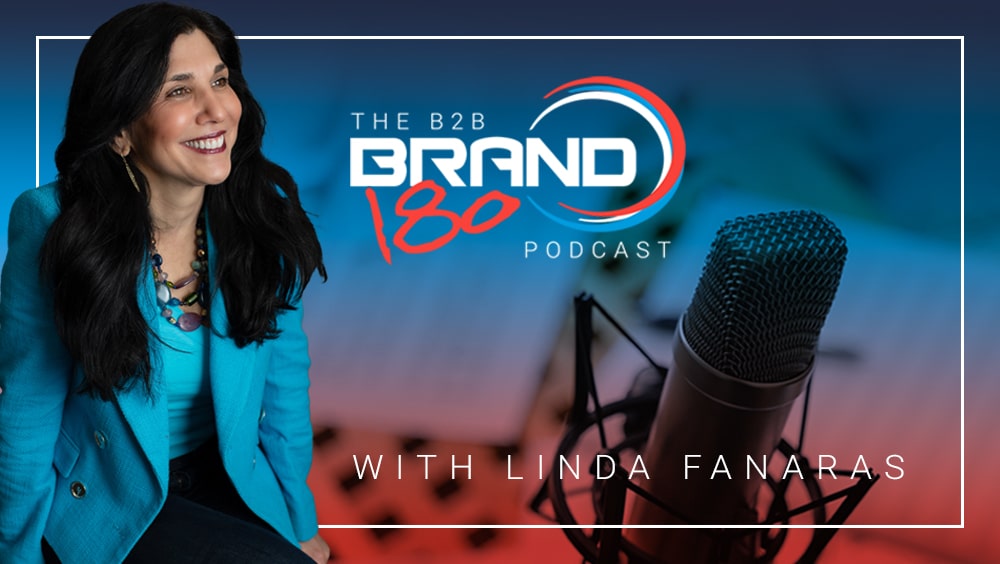
In this episode of the B2B Brand180 Podcast, Linda sits down with Shane Barker, CEO and founder of TraceFuse, to explore how reputation quietly drives buying decisions long before a sales conversation ever begins.
The conversation covers how to audit brand and executive presence online, respond effectively to negative reviews without damaging trust, and turn feedback from a liability into a competitive advantage.
02:05 Why Reputation Shapes Buying Decisions Before Sales
03:40 What Companies Miss When Auditing Their Online Reputation
06:00 Proactive vs. Reactive Reputation Management
07:55 Monitoring Tools and Tracking Brand Sentiment
12:10 Turning Reviews Into Trust and Growth Opportunities
17:10 Rapid Fire Questions: Platforms, Red Flags, and Ownership
https://www.linkedin.com/in/shanebarker/
Linda’s LinkedIn: https://www.linkedin.com/in/lindafanaras/
Millennium Agency: Brand Strategy | Marketing | Web Design: https://mill.agency
YouTube Channel: https://www.youtube.com/@mill.agency/
Linda’s Books:
Claim Your White Space
https://www.amazon.com/CLAIM-YOUR-WHITE-SPACE-CRITICAL-ebook/dp/B0CLK8VLYV
Passion + Profits: Fueling Business And Brand Success
https://www.amazon.com/Passion-Profits-Fueling-Business-Success-ebook/dp/B0CLLDDSNX/
Linda Fanaras:
Welcome to the B2B Brand 180 podcast where we discuss branding and marketing tools for business. My goal today is to provide some transformative and innovative approaches for you that can help you actually make 180-degree shift in your marketing efforts or even complete reversals in brand strategies. I’m Linda Fanaras, the owner of Millennium Agency, a branding and growth strategy firm, and the host of the B2B Brand 180 podcast, and I’m very excited to bring in Shane Barker. Shane is the CEO and founder of TraceFuse, the first Amazon TOS-compliant negative review removal system, and he has over 25 years of marketing experience supporting Fortune 500 brands. He has been recognized as a leading influencer, and his recent focus is on helping Amazon sellers and businesses combat negative reviews through TraceFuse’s innovative white hat solution. Welcome, Shane. It’s great to have you here.
Shane Barker:
Absolutely, Linda. Well first of all, thanks for having me. I really, really appreciate it.
Linda Fanaras:
So for our listeners today, I just want to let you know that you’ll learn about how reputation actually shapes the buying decisions long before a sale even enters a conversation and where brands lose control of their narrative across reviews, search results, maybe even social chatter, and then how to turn those reviews into a growth engine instead of a liability to your business, and why executives’ personal reputations now actually influence a company’s trust. And lastly, how to operationalize reputation tracking across teams, tools, and touchpoints. So Shane, we’ll just get in. I’d love to ask you a few really key questions to help our audience today. Most companies think that they know their reputation, which is often different than what is online versus their corporate reputation or what they think their business reputation is. What do they usually miss when they actually do an audit?
Shane Barker:
First and foremost, I recommend that everybody do an audit, and that should be for your business name and for your personal name. If you’re a C-level executive, then you got to make sure that your names are being cleared there too. People aren’t saying funny stuff, and what I mean by that, that’s not only people that may be in your organization, but it’s also going to be people that- maybe past employees, that could be competitors- there’s a lot of things that can happen there, so you just got to make sure that you don’t get bombarded or nothing bad happens there. And so when you run an audit, I mean there’s A, running the audit, which is awesome on anything. You do this on your website or anything where you go in, you’re going to take a look at it, be prepared if you haven’t ever ran an audit, it could be really great or it could not be great.
So you got to understand that, hey, your first audit, if you went to the doctor for the first time, you’re a little nervous, right? Man, it’s been a little while or whatever. It’s the same thing with an audit. Understand this is a starting point. If you’ve just started off there, obviously what could be good or bad? If it is bad, then what you want to do, or even if it’s good, is set up monitoring software. TraceFuse, what we do is help Amazon sellers. So we’re a totally different platform, so we don’t do monitoring for personal brands and for companies. We do it for reviews. But there’s definitely some great softwares out there. Let’s see, there’s mention.com, there’s Brand24, even Google alerts, which isn’t around as much anymore. There’s definitely a lot of things where you can go and set up keywords, which would be your business name, or you can even set it up for competitors, so you can also see what’s going on with your competitors.
So there’s a lot of good things that are happening that you can once again, be able to have an assessment. You don’t have to go and spend your first three hours googling everything and seeing who said something new about you. You can get a report in the morning, you can get it at the end of the week and end of the month, and then get an assessment of what that might look like. But as I said, you want to be proactive instead of reactive. So the idea of this is you want to go and take a look and then continuously do an assessment or, once again, have those reports sent to you. So you know where you’re currently at or you’re getting daily updates or weekly updates, whatever that may be, they’re going to be very, very important because that’s not only if people are saying bad things, but if people are saying good things.
I mean, you really want to know the sediment either way. If they’re saying bad things, then you got to either A, look into it, see if it’s valid, some due diligence that’s going to need to be done there. If they’re saying awesome things, guess what? That’s a great opportunity to turn these people into an advocate if they’re not already an advocate.
Linda Fanaras:
Right.
Shane Barker:
So thanking them, giving them discounts, those types of things of saying, “Hey, I didn’t have to do this, but I really appreciate you saying some great things,” about TraceFuse or Millennium Agency or whatever that is, great. Then they go, “Hey, thank you so much,” and then offering, once again, if you turn them into an evangelist some good value can happen there. If you really, people go, “Wow, that’s awesome,” Shane, or TraceFuse or Linda or whoever reached out, personally reached out to me, that’s a great feeling to have. So it’s a good thing to be able to assess and figure out where you’re at
Linda Fanaras:
And where things go wrong and how to make those corrections too. Absolutely. That’s a great point. So when an audit is done, there’s so many different touchpoints. It’s particularly on the B2C side, where you’re talking about maybe product reviews or company reviews or Google My Business or even social media accounts. Can you kind of sweep through maybe some of the areas that your product does check for?
Shane Barker:
So for TraceFuse, all we do is just Amazon based. So we just look at product reviews on Amazon, but as I said, like mention.com and Brand24, those are all companies that what they’ll do is they can look at all socials, they can look- even sometimes what they call the, not, well dark web, but it’s like people are, things that are being said there… they can look at everything and then really what they’re doing is just a search. So in other words, you put in a keyword, they search the internet. If something new is brought up there, then they just bring it to you in a report and say, “Hey, somebody on Twitter said this and the sediment is X, Y, and Z. It’s positive or it’s negative or it’s neutral.” Once again, you as whoever the owner is, you don’t always have to, I mean, it’s good to have that information, but that also doesn’t mean that you need to be the one that responds either.
You just need to be in the know of what’s going on there, and hopefully if you have a team, then your team can respond to that, and making sure they’re saying the right things. And the goal when you’re responding to people if it’s negative is to take the emotion out of it. We don’t need to slam somebody or bash somebody. What I always tell people is this, and I tell my son the same thing. When you look at something and when you respond to it, you want to respond to it the same way that you would respond to your mother. The idea of this is if you can’t show somebody else and be proud of what you just wrote, then you really got to think about that. So I tell people to step back a little bit. That can be a minute, five minutes. It could be one day. It can be, have somebody else come in and say, “Hey, this is what I was going to write. What are your sediments with this?” Because when you put that on the internet, it’s out there. There’s some stories of owners that are like, “Screw it. I’ll say whatever I want.” Okay, that’s fine. Yeah, which is fine. That’s great. Your attitude is like, “Hey, I’ll just say whatever I want.” Awesome. You can also talk about politics. You can also talk about very controversial stuff. You can do whatever you want, it’s your business. But I can tell you firsthand, I’ve seen businesses go down because of political thoughts because of different things that you put out there, and once again, if you do that, awesome.
Not here to tell you that’s wrong. I am telling you that you’re going to be dividing things up if you do that. I mean, that’s what you just got to be very, very careful of, and so the goal is to pull in as many people you can for your business, I’m assuming depending on what type of business you have. Obviously if you have a Republican website, probably don’t really care what the Democrats think and vice versa. Everybody has their own thing there, but the goal of it is just to protect your brand, right? Make sure you understand what’s being set up there and then how are you going to respond to that is very, very important. You can do a deep dive into it and see if they’re actually a customer. There’s a lot of ways of still being very nice about things.
I’ve seen people write stuff to say, “Hey, John Smith, I understand you weren’t real happy with our service and I just looked you up in our database and I don’t see that you were even a customer of ours, but once again, if you are a customer and we missed it…” Really what we’re doing was we’re building a little bit of doubt there. If you really did look into it and they’re not a customer, we’re not saying, “Hey, you’re not a customer. I hate you. Screw you. What are you doing? You’re trying to take my business down.“ Then you just look like you’re a little unravelled.
The idea of it is still stay positive. There’s still some ways to get the points across where you don’t have to attack anybody, but once again, I always recommend have somebody else take a look at what if you’re a very emotional person, if you can jump into something and know that you’re going to be even keeled on how you answer, maybe you don’t have that problem. I can tell you, I myself when I feel like my baby’s being attacked and my baby is my business and the things that I do, and I know how I am as an individual and how serious I take my business and how much I care for my customers and stuff, and once again, that doesn’t mean that you’re not going to have some people say some funny stuff online.
So I have my amazing wife that I’ve been with for 20 years that will come and take a look at it and I say, “Hey, what’s your vibe with this thing? Does it sound like secretive Shane that’s really mad that he’s writing a comment?” Or is it somebody that says, “Hey,” that validates maybe what the experience that they went through. “Hey, let’s take this offline. Let’s see what we can do to be able to make this right.”
The goal is always to take it offline because the problem is if you’re dealing with a crazy person or an ex-employee, once they start engaging and you feel like this is going in the wrong direction, you should always try to take it offline. If they want to keep it online, you got to figure out how do you shut it down and not, it’s not going to be healthy. You’re not going to win that situation. If you’re going back and forth and you’re slamming each other, I mean, that’s great if you’re in rap music and other stuff where drama brings tickets and all that, but we’re not in rap music, so that’s not what we need to do.
Linda Fanaras:
So when a negative review actually hits, is there a specific response strategy that actually helps protect the brand, could potentially convert that to a prospect?
Shane Barker:
Once again, being understanding if they are a customer, and they did deal with that saying, “Hey, listen, absolutely, I’m the owner, Shane. I’m absolutely going to take a look at that and see if that was an issue. If you did have to deal with that, I absolutely apologize. Hey, why don’t we talk offline?” Here goes my email address. Here goes my, I don’t know, if you want to give your phone number, probably email address, and then: “Great, reach out to us and let’s figure out a way that we can make this experience right for you,” because then you, Linda, as a consumer read that and go, “Oh, he seems like a nice guy.” Not every business is perfect. In fact, no business is perfect, right? Because you can ask a hundred people and you could have 99 people say, “Hey, I think you have a perfect business and you have somebody over here. That husband just broke up with her or boyfriend or girlfriend,” or whatever it is. Something happened. We’re like, “I just don’t like, well, it is what it is. You’re not going to make everybody happy, but it is nice to understand once again, what is going to be the protocol if something comes in negative or if something comes in positive, what do we want to do? And addressing the problem, assuming there really is a problem, that’s what you want to do. You want to be able to have an answer where it says, “Hey, totally get it. We understand, we’re going to go ahead and figure this out, look into this for you, but talk to me. Let’s talk offline so one can figure out what we can do to make this right.”
Linda Fanaras:
Okay, perfect. Should companies manage reputation of the brand and the executives and their products all differently, or is there sort of one integrated ecosystem that they should be considering?
Shane Barker:
Everybody at the higher up that has some kind of visual contribution to the company. So if you’re out there, then great. You want to be able to follow that and see what people are being said there. People that, if you’re talking to an individual or going after an individual, that’s going to be a little different than if you’re talking to a company. A company is usually faceless for the most part, unless you’re a company that has somebody, these big old owners big old face on there, then that happens. So what we look at is it’ll be very similar in regards to how you respond to those. The personal one is going to be very personal, like, “Hey, I had this personal experience. You’re the CEO, wanted to reach out to you. This is the issues that we had.” Great. Make sure you address it. Still the same thing people want to know, they’re being listened to. “Hey, I understand what you’re saying. I’m absolutely going to look into this. I really appreciate you bringing this to my attention because at XYZ company, we take this very seriously, and once again, I will get back to you. What is your email address?” Something like that. It’ll be very, very similar, but with a person to person might be a little more personal because it’s two people who are having a conversation than a company where they can be more corporate, I guess, and more still personal, but not 100% personal, I guess, if that makes sense.
Linda Fanaras:
Yeah, yeah, no, that makes sense. How do you benchmark your reputation against competitors and then turn those insights into actually a clear differentiation?
Shane Barker:
Well, one thing that we do, and what’s awesome is that when you monitor yourself and your business, but when you monitor competitors, that’s where I think the opportunity comes to potentially go in and reach out to those individuals. So if you have somebody that says, oh, I don’t like XYZ airlines, just as an example, and then maybe I’m Southwest and I’m watching that and saying, “Hey, Jennifer, sorry that you had a bad experience over at JetBlue.” I’m not sponsored by JetBlue or Southwest. I’m just giving examples here. I’m not saying I don’t like JetBlue here, but you could go in and say, “Sorry you had a bad experience. Hey, take a look at our Black Friday deal. If you ever need to/want to switch airlines, just let us know, right?” Because now what you’re doing is you’re using that as an opportunity to be able to A, not only protect your brand, but then also look at other things that are happening with other ones you can respond to that.
That’s a little, I’m not going to say it’s gutsy. You can do that. People do it all day long, or you can also look at it as an assessment and get a sediment for, guess what? What’s going on with that airline, as an example. If tons of people are saying, “Hey, there’s issues with this, this, and this,” then maybe that can be a future marketing thing for us. We look at this and say, “Hey, I see that good old United is charging for baggage and you guys had to pay $50 here at Southwest. We don’t charge for that,” which is untrue. Southwest does now charge for it. They just started doing that. But my point is, is that can be a selling point, right? Because now you’re saying people go, “Oh, an extra 50 bucks, I don’t want to pay that,” and you’re like, “Southwest, we don’t charge that. Save 50 bucks. Come on over.” So it can be used as an opportunity as well.
Linda Fanaras:
Okay, great. So I have five rapid fire questions. I’d love you to answer them in a sentence or two or three, but let’s get started. So what is the most powerful review platform for B2B right now?
Shane Barker:
I would have to go with Brand24.
Linda Fanaras:
Okay, okay. Yeah, I’m familiar with that. And then what is the biggest red flag in a brand’s search results?
Shane Barker:
If you see repetition and a lot of people saying the exact same things, so that’s over and over and over. A one-time deal, “Hey, this box was broken,” okay. But if you see 20 people that say the box was broken or the product came, it was malfunctioned or something like that, then I would say hey, there’s probably an issue there. Just because one person wrote something that doesn’t make it gold, especially on the Amazon platform, you can do unverified reviews, where you haven’t even bought the product so anybody can write a review. Any other platforms, they can do that as well, but the idea of that is to take a look at that and say, “Hey, let me dig a little deeper.” You want to go more than just the surface level, because that can be a competitor attacking them. That could be a number of different things, and we can’t expect the business to be perfect, but we definitely want to do a little deeper dive there.
Linda Fanaras:
Got it. Okay, perfect. And then what is one tool that everybody should definitely use for tracking online reputation? Is there one that’s out there regardless of if you’re B2B, B2C?
Shane Barker:
Like I said, the two premier here, mention.com and Brand24, and then we do have Google alerts like, like I said, it’s still around. It’s not quite as robust as these other ones are., looking at sediment and stuff like that. It just depends on what your budget is.
Linda Fanaras:
Okay, awesome. And then who should own a reputation management? Is it marketing, PR, the CEO?
Shane Barker:
If you have a PR company, that’s awesome and really depends on how big your organization is. So usually that would be PR because they’re the ones that know how to assess that. If you don’t have a PR company, then maybe whoever does your social, if it’s not who does your social, then you might be a solo premier and then guess what? You get to be HR, you get to be the secretary, president and everything, and you’re going to have to respond to those.
Linda Fanaras:
Okay, awesome. What is one move that they could do that would instantly strengthen their online reputation? Either for their business or for them personally?
Shane Barker:
Once again, just getting access to those softwares and then having a plan in place. Make sure that you’re being more prepared. I always tell people, be prepared for things instead of being, I always say being proactive instead of reactive. Reactive is, “Oh crap, we got to get in a meeting. We got to figure this out.” Proactive is saying, “Hey, we’ve already been trained for this.” If you have something happens at a local school, guess what? The military, everybody’s already been trained for that. They don’t go, “Oh, crap, what do we do now?” It’s the same thing with your business. Go, “Hey, if these three scenarios happen, this is how we would handle those situations.” And then you know that if anything does happen that your team is going to be there, not to say you don’t need to have a meeting about it. The idea is you at least have a plan moving forward.
Linda Fanaras:
Perfect. Awesome. Well, thank you, Shane. That’s awesome. Thanks so much for your insight regarding reputation management today. That’s an area that most businesses, I think push aside, I’d love for you to share how people can get in touch with you.
Shane Barker:
So you can go to shanebarker.com. That is where I have all of my eBooks. Most of them are free. We also have a lot of, I have a knowledge hub over there. People can get information about AI, influencer marketing, the whole nine. And then if you’re looking, you’re an Amazon seller and you want to know more about our services, it’s just tracefuse.ai. And I’ve got a great little trick for you that if you want to get in contact with me personally, it can be, it’s [email protected] or [email protected]. I know that’s super tricky, but yep. There we go. So then you guys can get in contact with me anytime if you have any questions about reputation management for your brand or if you have any questions about Amazon and the review system.
Linda Fanaras:
Well, I just want to take a moment and thank our audience today. If you like what you heard, please hit like, share or subscribe. If you need to connect with me directly, you can go to lindafanaras.com or visit us at mill.agency, or lastly, just simply connect with me on LinkedIn. Thank you for listening in today.