Marketing: Right Place, Right Time
Strawberry Pop-Tarts®. If you live in Florida, you know there is a strong likelihood that you will at some point have to contend with a hurricane. Several went through Florida in 2004 and Wal-Mart decided to study its product sales during those periods. What the data revealed was interesting. According to a QualityDigest article, Wal-Mart expected to see a significant jump in the sales of water, diapers, flashlights, batteries, plywood, generators and the like. Instead what they found was strawberry Pop-Tarts® were purchased 700 times the rate of any other product during the hurricane season that year.
As David Steinberg points out in Entrepreneur, our job as marketers is to “get out the right message, in front of the right audience, at the right time, to drive the right (desired) consumer behavior.” Now more than ever, in today’s technology driven, digital realm we need data to do that. And with just seven seconds to connect and convert, data insights are important on the creative side as well. Hurricane season begins June 1. Pop-Tarts® anyone?
While data can tell us much about what, when, where and how often consumers buy based on past purchases, you still have to sell the product or service you are offering. This is where the creative side of marketing comes in, and connects the dots to why they purchase. Here are a few points to ponder as you look to efficiently and effectively marry data and creative in your digital and content marketing.
Mining Your Data
The biggest driver of data digital marketing according to an article and infographic in AdWeek is to be more customer-centric, targeting messages and offerings for a more personalized customer experience. Customers have grown to expect that you know more about them, whether online or off, and they want brand consistency throughout their journey. That’s why customer service and satisfaction data have become paramount from hospitality to healthcare. In addition to wanting to know when, where and why you chose a particular product or service, marketers want to know how you felt about it. Much of this consumer engagement information is culled from websites, mobile apps, social media and call centers, and serves as the foundation for future campaigns.
Creative That Connects
However, numbers don’t tell the whole story. You still have to play into peoples’ emotions, what’s trending and rise to the surface among a sea of competing messages. Packaging still matters, and as mentioned previously, you have mere seconds to have impact. As Robert Glazer talks about in his post on Convince & Convert, good marketing ideas take risks and more than half of any campaign’s sales impact comes from the creative, not data. This is not to say anyone should design in a vacuum. Testing messages before rolling out a campaign is by no means a new idea, and that feedback data helps hone the right message to be delivered to the right customer.
Visual Storytelling
Now that you have key customer data in-step with killer creative, traffic is your next goal. From a B2C perspective you want to drive sales and growth. In the B2B world you want to demonstrate your expertise and be the go-to authority on key trends and issues. This is where data can be cultivated to exemplify your experience and marketing acumen based on success.
At the end of the day you are working to create affinity and top-of-mind awareness with your brand. One of the best ways to achieve this is through show and tell. You show that you have what consumers want and need based on supporting data that is visually appealing, easily consumable and actionable (strawberry Pop-tarts® are coated with frosting and have multicolored sprinkles). Then engage consumers and encourage them tell you how your product(s) made a difference in their everyday—or in the case of hurricane season, no so everyday—lives.
Need a Partner?
Are you ready to improve your performance on the digital dance floor? Millennium can partner with you to mine your data, gain insight on your customers’ preferences and engagement and develop a creative campaign that connects. Email me at [email protected] or call 877-873-7445.
The New Meaning of the Word “Mentor”
Google the word mentor and you come up with a definition that reads: to advise or train (someone, especially a younger colleague).
Passing on skills and knowledge from seasoned professionals to those who are up and coming is the traditional view of mentoring. That being said, the technology, skills and knowledge necessary for success in business today aren’t intrinsic to most leaders, but they are to the digital natives, also known as Millennials. Want to create a truly dynamic organization where everyone growths together? Ask not only what you can teach, but what you can learn.
Called reverse mentoring, mentoring-up or reciprocal mentoring, the idea is that today’s mentoring isn’t about advising or training someone younger, but learning from one another through collaboration, integration and cooperation up and down the corporate ladder. This is not a new idea, as Beth Ann Kaminkow wrote in her January 2011 article in Advertising Age and it remains true today:
Never before have the diverse generations within the work force had so many unique competencies and strengths to offer each other. We are living in a time when a youthful understanding and comfort level with technology and merging media/devices trumps, in some instances, years of experience and knowledge. Reciprocal mentoring offers a developmental bridge that narrows the divide and eases an organization’s progression through change.
Having your organization take a more holistic approach to mentoring not only helps the bottom line by creating greater alignment with your mission, it also bridges the gap between generations.
4 Ways to Improve the Way You Mentor
As noted by MindTools, an online management and leadership training company, “Baby Boomers, Generation X and Millennials have experienced vastly different social and cultural situations, which has resulted in varied work ethics, mindsets and attitudes.” A holistic approach to mentoring can create mutual understanding through open communication and shared learning, united under one mission over time.
Whether formal or informal, focus in on these four key points to establish or retool your mentoring program:
Open Communication. At its core, mentoring is about communication and connecting more senior level and junior executives face-to-face. While the main focus is on professional growth, you can’t foster that without personal understanding. This includes background, education, passions and goals. Everyone has a story to tell. Listen. It will provide greater insight on where you can connect and grow together.
Shared Learning. Mentoring isn’t about status and power. It is about sharing, not showboating. Senior employees have greater work experience and understanding of organizational culture that is critical intellectual capital. You have to understand where you’ve been in order to know where you are going. At the same time, digitally savvy junior employees can help explain and integrate new technologies to more efficiently achieve operational goals.
Clear Mission. Having a clear mission is critical to the success of any organization. Greater alignment and articulation of that mission can be achieved through mentoring. Mentoring is about cultivating leaders, and true leadership is about cultivating individual strengths to create collective success. As Liz Ryan describes in a recent article for Forbes: “A leader and his or her team have a mission. They all know what the mission is and they know their piece in it. Leaders allow people to design their own jobs as much as possible and to put their own stamp on their jobs.”
Time. Mentoring takes time. A senior employee can’t impart all their experience over a one-hour lunch. And a junior employee is going to quickly realize “older folks” don’t necessarily catch on to the new operating system or digital application in mere seconds. Holistic mentoring is about mutual growth over the long-term, not simply career advancement in the here and now. This should be a relationship that develops over time and builds trust.
As Lee Colon notes in Inc., for your organization to move forward it may need to shift into reverse, and mentor up, not just down. And the ideal mentor may not be inside your organization, it may be outside.
Ready to Mentor Up?
Need more insight on how to technologically advance your marketing and connect your content online? Our digital natives are always up for a chat and willing to share their knowledge and experience. Give us a call at 877-873-7445 or email [email protected].
Up Your Social Media Game
Being social on a social media network seems like a no brainer. As individuals, most of us have no problem sharing our daily activities, achievements, memories or moments that make us smile via pictures, videos or shared experiences. As organizations, however, we can sometimes forget the social part, and instead emphasize the promotional. We tend to do more telling than we do sharing with, or listening to, our target audiences. That needs to change.
Know Your Network
Want to get the conversation started or amplify what your company is doing? First things first, you need to know what network or networks are best for your organization. It will depend on who you are, who your target audience is, and what you want them to do that will determine where you should be. Let’s take a look at the most popular social networks in order of popularity based on unique monthly visitors, and their characteristics.
- Facebook. Hands down, Facebook is the most popular social networking site across the board. Most users are age 25+, but worldwide they still have 50 million users under the age of 25. For Facebook users, it is all about them: their pictures, their stories, their ideas, worries and concerns. If you are going to be posting on Facebook, your content has to speak directly to the issues, news and views your target audience is interested in and engaging with regularly. How does your product or service address their concerns, get them excited or answer their questions? Those are the questions you need to answer and the approach you need to take on Facebook.
- Twitter. Twitter is all about what is happening right now and the majority of its users are age 18 – 29. Twitter users want to be part of the conversation that is happening in real time, and when commenting or questioning, expect a response in real time as well. Twitter chats are an effective use of the network in that conversations can be focused and relevant to audience segments. It also provides access to your organization and its thought leaders online that isn’t typically available offline.
- Pinterest. If it is women you are targeting, then Pinterest is the place to be as 80 percent of its users are female. The greatest percentage of its users are 18 -49 and they are there to buy. Pinterest is a planning tool that its users can go back to with direct links to make online purchases whether for an item, an event, a recipe or information. You can segment your audiences with different pin boards, keeping in mind this network relies on visuals in a highly scannable environment.
- Instagram. As 37 percent of its users are between 18 – 29, Instagram is also known as the “happy hour network.” Visual marketing is the key and you have to be mobile to play—you cannot post from a desktop browser. It is about creating brand affinity through visual storytelling. Your visual identity takes center stage in the conversation, grounded by either a branded hashtag or connecting your product or service to a trending hashtag.
Give Them Something to Talk About
Now that you know how the most popular social networks are used, and who is using them, it is time to engage. While at the end of the day the ultimate goal is about advancing your brand, social media is where you live it by showcasing your organization’s personality.
- How To. While the purpose of your product or service may seem obvious, the key here is not simply to tell people about it, but show them how it enhances their life. Take jewelry as an example. It is not simply about selling a necklace, but completing an outfit, making a statement or being on trend. The same is true with food. Nutella has created online communities by moving the chocolate hazelnut spread beyond a simple slice of bread. By demonstrating how your product fits into the bigger picture, makes it more personal and relevant to individual users. It sparks ideas, elicits emotion and creates conversation.
- Customer Service. If your organization prides itself on its customer service, then social media is where the rubber meets the road. More and more people are going online to share the good and the bad. The key is to respond to all comments. Thank those for sharing the good and demonstrating your mission in action, but also show empathy and give answers to those whose experience with your brand fell short of expectations.
- User Generated. Let your customers create and share content about your brand for you. The #ShareaCoke campaign quickly comes to mind as an example. It encouraged Coke drinkers to share photos and stories about when, where and with who they enjoyed a Coke. The campaign not only demonstrates, but creates, community by tapping into consumer feelings about the product.
- Spotlight People. Behind every successful brand are people. Think of the television ads for Honey Bunches of Oats. The goal is to sell cereal, but the ad focuses on the people making and packaging the cereal. Personalize your brand by featuring those who design, build or deliver your product or service. For an airline it might be the ground crew. In healthcare, go beyond the white coat and give patients a sense of who their provider is outside the hospital. For a utility it’s the line crew who responds at a moment’s notice when there is an outage. People relate to people. Give life to your brand by showcasing the people behind it.
- Offer an Experience. Further building on people connecting with people, don’t tell someone what it feels like to complete a marathon, a triathlon or an obstacle course. Show them. Put them in the moment. Connect with their emotions about the thrill of finishing or being defeated, but trying again. Travel to new places, reunite with family or make possible the impossible. Through a shared, virtual experience, you can inspire people to rise up, sign up or show up.
Ready to Share?
Being social on social media is all about the human experience and connecting with people emotionally. It’s about walking the talk and giving your brand life beyond the product or service you offer. Need help? A professional marketing agency can help elevate your social media game. Let’s connect. Email [email protected] or call 877-873-7445.
Videos Captivate Our Attention
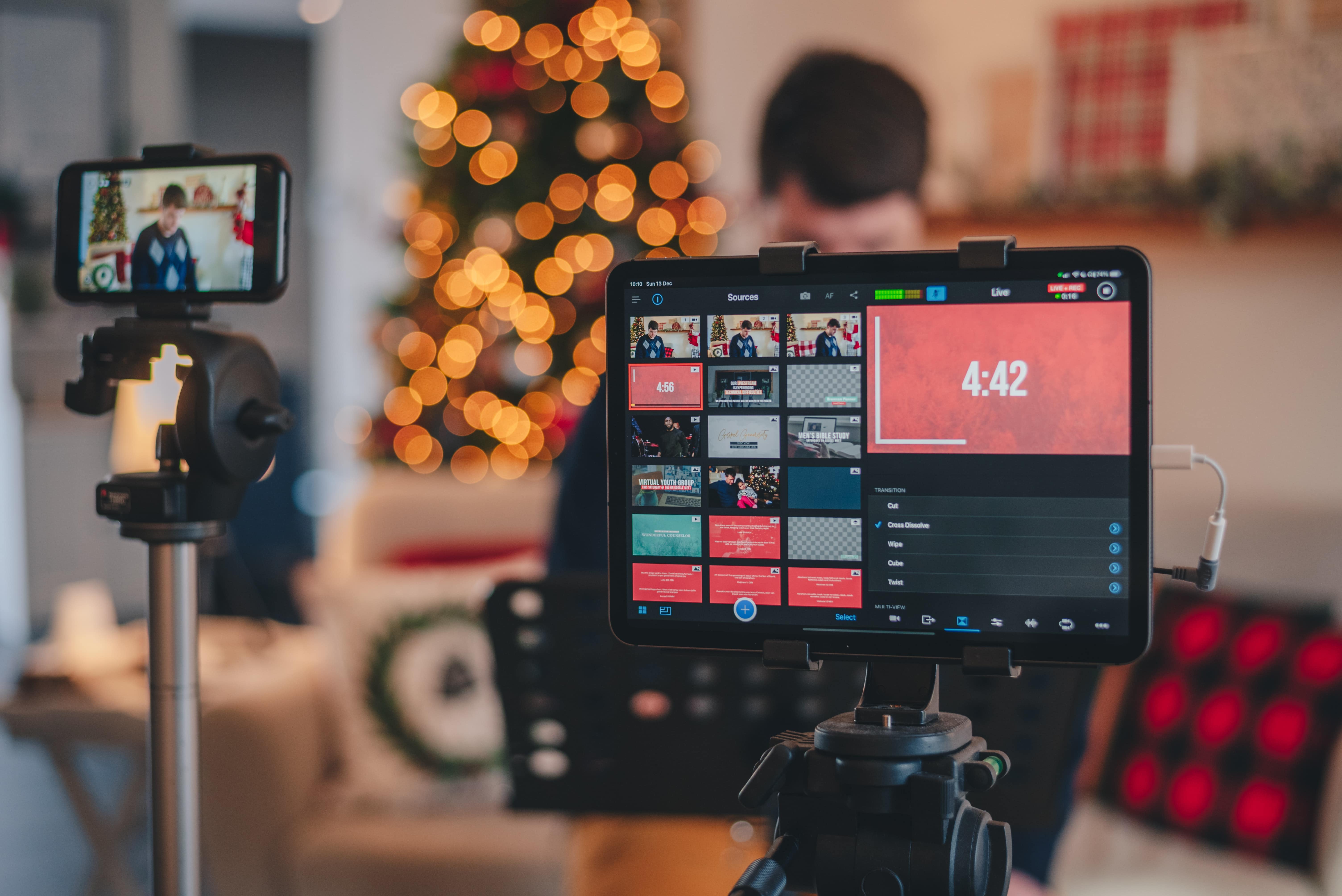
Question: As you scroll through your Facebook newsfeed, how long does it take before you see video content that seems worth watching? A good bet is less than 10 seconds and not more than three posts in, you’ve already stopped scrolling, and what you see next will determine whether you engage with the video further by clicking on it to hear the sound.
It kind of reminds me of the Daily Prophet from the Harry Potter movies. It was a newspaper with moving pictures (Maybe that’s what the newspaper industry needs to do to revitalize and revolutionize the industry! But I digress.) The characters reacted to the pictures first and the words second. The same is true in our rapidly changing online world.
Creating Video Content is Key For Your Business
If a picture is worth 1,000 words, quality video content is worth . . . A lot!
According to HubSpot video accounts for 50% of all online content, and is expected to capture 79% of all online traffic by 2018 based on stats compiled by WebDAM. Other fun facts to consider:
- We are skimmers as 81% of us only skim online content, we don’t read it.
- It takes milliseconds for someone to form their initial impression, and within eight seconds they’ll be on to something more interesting if you don’t “have them at hello.”
- 84% of all communications will be visual by 2018
- Even today, 85% of people are more likely to buy a product after viewing a product video.
Kind of funny when you think about it. After all, it was pictures drawn on rocks and cave walls that told the story of those that walked the earth before us. But again, I digress. Or do I?
Maximize Your Visual Assets

Compelling visuals draw you in, make you feel something, connect you literally, emotionally and/or spiritually to a moment in time and compel you to react—liking or disliking, sharing online or in person, and commenting to join the conversation. Whether or not you know who the people are in the photos above, I don’t need words to tell you what is going on. You get the picture.
With quality video content you can take that to the next level, and as marketing and public relations people we are always looking for new and different ways to connect our products and ideas with target audiences. Sometimes it can be visually literal, by showcasing the product/service/outcome, or sometimes it is a more covert approach. Consider the following ad video. It had the most shares, 6,432,941 share to be exact, across Twitter, Facebook and blogs in 2015.
https://www.youtube.com/watch?v=vnVuqfXohxc
As you know it is Android’s Friends Furever ad. Let’s talk about why it is so engaging.
- It’s short, with 1:01 run time
- It features animals.
- It features animals from different species being unlikely friends.
- It has music that helps connect emotionally with the visuals.
- There are only five words in the whole video.
- The words underscore the message of the visuals and the music.
- The video content is captivating and holds your attention. You don’t know until the very end who the ad is for (at least you didn’t the first time you watched it).
- It tells a story. And therein lies the secret of its success.
What’s Your Story?
Not once do you see a tablet or phone on an Android platform featured in this ad, but you certainly understand the message that everyone can be together online without having to use the same device. It’s what sets the Android operating system apart from Apple.
Large or small, businesses need to set themselves apart in a crowded marketplace, especially in our fast-moving, mobile, online world. But the clock is ticking, so if video content isn’t part of your promotional strategy today, here are some options to consider:
- Demonstrate. Use engaging video content to show how your product or service can make a difference in the lives of your consumer. How-to videos can also simplify the assembly process if it is a product that isn’t usable straight out of the box. Or you can position yourself as an expert in your field by offering tips or tricks and keep your name out in front. Seeing is believing.
- Humanize. If you’re an organization trying to gain support and make a difference in the world, show what you are doing. Maybe it’s bringing clean drinking water to people in third world countries. Showing people the challenges you are trying to help overcome, and the benefits of your efforts, will take viewers to a place they aren’t like to visit themselves, and help them relate through a shared experience.
- Testify. One of the most powerful ways to share your message is to let your customers do it for you. Take doctors for example. Your knee hurts. Who do you go see? People don’t usually look for specialists until they need one, and we know word-of-mouth from family and friends drives many patient referrals. If you feature a patient whose knee surgery from a particular doctor in your hospital got them back in the game, so to speak, and provide compelling visuals to highlight the success of the surgery and how happy the patient is post-operation, that’s the story you would want to tell.
- Introduce. Video biographies are a great way to introduce your organization and its people to prospective consumers, while giving your existing ones a way to refer or promote you online. From doctors to realtors, and even college professors, you can give people a better sense of who you are before meeting them in person, leading to a stronger connection.
- Diversify. Remember, it is about mixing up your marketing. Video content is another way to tell the same story in a different way. Think about how you can take the focus of a press release, print ad or even radio spot and turn it into a visual piece that connects online.
Lights, Camera, Action
So now you know you need to start rolling with video, but need help with a strategy and/or production? Millennium is here to help you reach audiences online and across platforms. Let’s connect at [email protected] or call 1-877-873-7445.
About Millennium Agency
Millennium Agency is a nationally recognized, top woman led B2B branding, positioning, and digital marketing firm who knows how to create value that emotionally influences your customer’s buying decision, giving you the competitive advantage. As your trusted partner in B2B software technology and manufacturing, we provide the branding and positioning framework that make an impact – so you can focus on what you do best – run your business successfully. With offices in Boston and New Hampshire, and a worldwide presence, the professionals at Millennium Agency would like to learn more about your business. Visit www.mill.agency or book time here.
Seven seconds.
That is about all the time you have to make or break a connection with your online content. In this very fast-paced, online and visual world, the growth of digital marketing in higher education means colleges and universities have to focus, optimize and personalize their efforts to convert prospective students into enrolled ones.
Understanding the Higher Education Digital Landscape
As stated it in a recent article on SearchEngine Journal, we live in a world where the Internet knows more about you than a coworker on the other side of the cubicle wall. Based on your online location, browsing and purchasing habits the Internet (thinks it) knows your favorite food, books, music, charities, restaurants, movies, recreational activities and more. It is the center of today’s digital marketing universe as 91 percent of Americans keep their mobile device in reach at all times according to Hanover Research. For many of us it is a whole new world, but for Generation Z (born beginning mid-1990s), it is the only world they have ever known.
Key digital marketing trends expected to further evolve in 2016:
- Mobile will supersede desktop.
- App usage will increase and be the main driver of brand content.
- Personalization of the user experience.
- New optimization strategies.
- Video ads to increase.
- Virtual reality will further enhance visual content.
Make it Personal
“Content management systems are . . . digital experience platforms that empower teams to create unique destinations,” states Andy Hoang, chief marketing officer at Long Beach State University, in an eCampus article about 2016 higher education perspectives and predictions. “For a majority of prospective students, their first experience with a university is no longer a physical one. It’s digital. More universities will create homepages with content that will bring their campuses to life, making it feel like a travel destination, connecting visitors with human experiences and the culture of the university.”
A more personalized approach from inbound marketing, the website and finally the campus visit, not only promotes consistent branding online to offline; it enhances the user experience and allows your institution to connect more quickly because it is unique to each prospective student. By building on the personalization with each visit, communications can be targeted and enhance the prospective student’s overall journey to matriculation. This could result in fewer, but more interested, prospective students.
Looking at digital marketing in higher education from a social perspective, marketers need to keep in mind that Facebook is the number one social media platform, not only overall, but for teenagers age 13 – 17 as well, according to Pew Research.
The best use of Facebook with digital marketing in higher education is to:
- Build digital communities through groups.
- Show campus culture.
- Promote upcoming events.
- Encourage athletic teams.
- Keep students informed with campus news/announcements.
Doing so gets prospective students connected before they ever come to campus, and enables them to build on those relationships throughout their college journey.
Go Mobile
It wasn’t that long ago that the primary discussion related to mobile was ensuring your web content was optimized for mobile with the rise of tablets and greater use of cell phones. Well that is so 2013.
According to Hanover Research’s 2016 update on trends in higher education marketing:
- Half of Internet users worldwide primarily use a mobile device for surfing the web.
- 43% of college-aged students report using a mobile device for “all of their web browsing.”
- 68% report looking at a college website on a mobile device.
- Two-thirds of students would be willing to receive a text message from a prospective college.
As Karine Joly stated in University Business, back in January 2013, “The digitalization of marketing is happening. This is where you can reach your constituents.” Knowing this is important for not only how prospective students are accessing information about your institution, but in shaping the character of that content. Remember the seven second rule? It needs to be fast and easy, but also rewarding.
So, content has to not only be optimized, but organized so prospective students can find exactly what they want, when they want, while browsing on their phone. If ever higher education marketers needed an argument that students, not faculty, are the primary target audience of their website, this is it. A prospective student’s online experience—fast, slow, error-free, easily readable/skimmable—is going to impact their perspective of your college or university overall, determining whether or not they take the next step on your digital pathway.
Don’t forget to be social. Generation Z is driving social media’s evolution. They have always used social media, are early adopters, and what they expect from social media has influenced how the generations before them use it as well. While studies differ, a prospective student may be more likely to engage with you through social media than they are to ever open an email from you.
And there should be benefits to “membership.” Cultivate your prospects by offering them some exclusive benefit from visiting a site or joining an online chat. Social rewards are a way to increase word-of-mouth, brand awareness, and in the case of prospective students, institutional affinity.
Be Visual
We know from the old Viewfinder days that a picture is worth a thousand words. Fast forward to 2016 and the cardboard Google Goggles are giving us flashbacks, but with a focus on virtual video using your phone.
Video marketing has exploded over the past year with video streaming and video advertising leading the way (think how-to recipes popping up in your Facebook newsfeed). As Paige Frances, the CIO of Fairfield University, pointed out in her predictions to eCampus:
“I see virtual reality rearing a significant head in the technology landscape. It’s already a strong buzzword; yet I believe it will gain momentum in higher education in 2016 specifically within the areas of recruiting and marketing and feasibly through academics. The ability to communicate a felt experience from a distance, creating a tangible response to a virtual immersion, may very well leapfrog in-person visits and face-to-face interactions during the attraction process.”
Your institution may not yet be ready to launch its own 3D immersion campus tour, but video should play a greater role in your digital playbook going forward, as Generation Z isn’t going to wait for a campus visit to rate the institutional experience.
But let’s not forget other visual mediums. Going back to being social, Instagram, offers colleges and universities the opportunity to connect by offering unique perspectives to campus life. The University of Florida has been singled out as a “doing it right” user of Instagram by sharing behind the scenes perspectives that help foster a greater sense of community. With nearly 80,000 followers, they are indeed doing something right. Ideas for emulating their success include:
Highlight campus life & activities.
- Promote events, sporting or otherwise.
- Foster a campus community & culture.
- Provide sneak peeks and behind-the-scenes content.
- Showcase model students, groups, faculty, and more.
Your Digital Marketing Plan Going Forward
Now you are ready to take your student recruitment to the next level by enhancing and maximizing your digital marketing efforts. You know you’ll need to develop a personalized experience for the mobile environment that lets prospective students see what campus life is about, not simply read about it. Millennium is here to help you restructure and better integrate digital into your recruitment marketing plans. Let’s connect: [email protected] or 1-877-873-7445.
About Millennium Agency
Millennium Agency is a nationally recognized, top woman led B2B branding, positioning, and digital marketing firm who knows how to create value that emotionally influences your customer’s buying decision, giving you the competitive advantage. As your trusted partner in B2B software technology and manufacturing, we provide the branding and positioning framework that make an impact – so you can focus on what you do best – run your business successfully. With offices in Boston and New Hampshire, and a worldwide presence, the professionals at Millennium Agency would like to learn more about your business. Visit www.mill.agency or book time here.
The Search Marketing Expo took place in New York City last week and some seriously game-changing marketing stats were revealed. Stats we know will be useful in refueling your digital marketing efforts.
50% of Search Queries tend to be 4 Words or More
Gone are the days of a couple of buzzwords being typed into Google and marketers focusing optimizing these keywords. This shift means marketers should be communicating more with their support teams, the ones who field the questions not on your website, and find out what people are asking so you can make sure your marketing is answering these questions (and phrases) on your site.
97% of Leads Are Lost on Leaky Landing Pages
WordStream founder, Larry Kim, shared this jaw-dropping stat with attendees. It goes to show that traffic generation efforts are fruitless if visitors are just leaving, doesn’t it?
The solution? Call-only buttons. These are newer features that we’re seeing on Twitter, Facebook, and even Google AdWords. Instead of directing leads to your website, the idea is to direct them straight to you.
If you’re not convinced, check out the next stat.
Click-to-Call Commerce is set to Reach $1 Trillion in 2015 – and Double by 2019
The bottom line: if your search campaigns aren’t using click-to-call, or you’re not properly tracking those phone calls, you’re seriously missing out on the value they could be bringing your business.
It’s Become Twice as Hard to Get Ads Seen on Mobile SERPs
Digital strategies for the mobile landscape are a whole different playing field. What you need to be doing to get your ads seen on mobile SERPs is bidding up. Start focusing on high purchase intent keywords, specifically long-tailed queries. Also focus on emergency and purchase-type keywords such as “discount” and “buy.” Take those keywords and stick them in their own campaigns and get to work bidding up on mobile.
Don’t let poor mobile performance put you off. Revamp that strategy and save your lower-intent keywords for desktop digital campaigns where you’re more likely to gain profitable visibility.
Over 86% of Our Time on Our Phones is Spent within Apps
Once you get a lead to download your app, the chances of converting them, or keeping consumers coming back, can increase drastically. Let’s think about it. If you get someone to utilize your app, that’s a direct marketing channel to them and massive opportunity to build long-term brand loyalists and customers.
So it’s time to make marketing your company’s app high priority. Perhaps even more so than mobile. Create a strategy that will get more app traffic through Twitter Cards, Facebook App links and Google App Index.
All Sounds a Little Daunting?
If you need help with your digital marketing strategy, give Millennium a call at 1-877-873-7445 or feel free to send me, Kyle Mallinger, an email at [email protected] or find me on Twitter.
Have you been sitting staring at your website lately thinking it’s time for a refresh? Redesigning a website is pretty similar to remodeling a room at home. It’s not only about a quick coat of paint, it’s about all the pieces that work together to create the perfect ambience.
It’s the same for a website redesign. You can’t just fill in a couple of fresh colors. You need to think about all the components of your site.
Before you start adding new features, you need to be prepared for potential issues. This is where you cover the valuables and lay down the tarp. If you don’t, you’re going to regret the mess later on.
So before you start tinkering with coding, step back and start right at the beginning to avoid these 3 website design mistakes.
Mistake #1: No Strategy or Goals
Starting a new project is exciting, right? You want to hit the ground running, the ideas and images are overflowing in your mind and you want to make it a reality, but stop just for a minute.
A gung-ho attitude isn’t going to help here; you need to start by setting out goals. SMART (specific, measurable, attainable, realistic, time-bound) goals. This will help you to determine what your site needs to achieve.
For instance, let’s say your goal is to gain 20% more contacts in the next quarter. That affects your redesign in that you’ll need to plan for more calls to action, landing pages, and forms. But if you don’t set out those goals, you won’t realize that.
Mistake #2: Not Basing Your Decisions on Numbers
Bad news: a website redesign involves math.
Yes, of course there’s heaps of creativity that go into a redesign, too, but data and analytics are at the heart of it all. Since goals drive your redesign, it is important to know your site metrics. Before even starting the redesign, you need to use data to assess what has and hasn’t been working.
Neglecting analytics presents two problems: you risk changing things that are working exceptionally well and you risk holding on to badly performing elements.
Mistake #3: Keeping Your Content
Remember when you first designed your website, or last updated it? You probably spent hours upon hours crafting cool phrases and relevant information to display on your pages. As great as that content is, you can’t hold onto it forever.
Since you’ll be changing your format, structure and design, it makes sense to change your content. You may want to place more emphasis on videos and illustrations, for example.
Speaking of content, we’re not just referring to the basic website pages. Your overall content strategy – including blogging and providing helpful, relevant information – should also adapt to the redesign. You should be boasting premium content on every page, so if you add new pages, you may need new top-quality content.
Are You Up for the Challenge?
These are just 3 key challenges you face with a website redesign. Knowing what you’re up against is half the battle. If you’re ready to maneuver these obstacles and create an incredible site for your business, give Millennium a call at 1-877-873-7445 or shoot me, Mark Dingman, an email at [email protected]. I also love a good Twitter conversation so find me online at @MRDingman.
You’ve just started a business and you want to grow it quickly, but you have no idea where to start.
Before you even begin considering scaling your new business, it is vital that you have something people will get excited about, something they will be willing to pay for.
But you probably know that already, so let’s look at what your marketing strategy should be incorporating to attract and retain consumers. Here are 3 marketing strategy tips for startups:
1. Inbound and Content
Let’s say you’ve recently started a company that is hard at work building a solution to a specific problem that you’ve identified within your niche. It’s time to start writing about it. No doubt as you begin writing your passion and expertise will shine through and the result will be great content that drives lead generation.
Start engaging on Twitter, answering questions on Quora and begin hanging out online wherever your particular buyer personas can be found. Focus on adding value to conversations and highlight premium content that is going to convert visitors into paying customers right at the top of the funnel.
One particular technique that has proved popular is to write about your growth process with transparency. This can foster a good amount of engagement with your audience.
Investing time and budget in quality content will allow you to attract the right traffic and drive engagement while enjoying compounding returns over time.
2. Product Marketing
As your audience grows, concentrate on removing barriers as you strive to improve the customer experience. Now that you have your prospect’s attention, start converting them and showing them the value of your offerings. Show them just how much better life will be when they buy your products or services.
Be sure to lay out a clear value proposition and conversion path in your marketing strategy. Offer something for free, such as a demo or trial so you can demonstrate the significance of your offering.
3. Evangelism
Growth and referrals via word of mouth are some of the best ways to increase turnover, create second-order revenue and accelerate growth while lowering customer acquisition costs.
Every single customer is a marketing opportunity. Strive to go above and beyond the customer service experience and people are far more likely to recommend you.
By using these tactics in your marketing strategy, you will gain an established inbound lead speed and will be better positioned to calculate foreseeable revenue growth.
Growing Your Business
This can all feel pretty daunting, but growing your business is a task where your new we’ll orchestrated sales engine and marketing strategy will continue to pay dividends.
To learn more about marketing strategies and growing a business feel free to contact me, Linda Fanaras, at 877-873-7445 or via email at [email protected]. You can also strike up a conversation with me on Twitter and LinkedIn.
In our highly connected and insightfully customized world of consumer engagement, lead nurturing ROI programs are paramount to building long-term relationships with prospective customers and retaining the attention of existing ones. Well-planned lead nurturing strategies allow companies to interact with consumers throughout various stages of the courting process, tailoring the messaging they receive to their specific product or service needs. It offers a human element so your company stands out.
Nurturing Data
You’re probably wondering just how well this “courting process” really works. According to Inbound Marketing Agents IMA, nurtured leads make 47% larger purchases than non-nurtured leads and companies with mature lead generation strategies enjoy 9.3% higher sales, but it doesn’t stop there. Lead nurturing follows the prospect through the entire process and reaps benefits along the way. Not only will this strategy produce short-term results with new conversions, but it will also help retain loyal customers who begin to feel like they are part of your company’s “family.”
Still having trouble wrapping your head around it? The numbers don’t lie:
- Lead nurturing emails get 4-10 times the response rate compared to standalone email blasts reports Silverpop.
- Lead nurturing emails generate an 8% CTR compared to general email sends, which generate just a 3% CTR says inbound marketing powerhouse HubSpot.
- Companies that excel at lead nurturing have 9% more sales reps making quota states CSO Insights.
- Nurtured leads produce, on average, a 20% increase in sales opportunities versus non-nurtured leads indicates a report from DemandGen.
- Companies that excel at lead nurturing generate 50% more sales-ready leads at 33% lower cost and companies that automate lead management see a 10% or greater increase in revenue in just 6-9 months says a study by Gartner Research
Lead nurturing is driven by obtaining valuable customer data collected through various touchpoints. Once you have these insights they can be easily segmented and dissected to personalize your marketing reach, making it more likely your efforts will lead to a conversion down the road, and we’re not talking just one sale but for a long-time, loyal customer.
Personalization is Key
In a world where it’s becoming abundantly easy to explore products, services, and brands, that personal touch is essential when trying to woo over potential clientele. You must first get their attention. This can be done by engaging them with content and then nurturing the relationship along the way until they are ready to buy. Understanding your customers and their needs is essential to crafting a successful lead nurturing program and knowing what questions they’ll need answered well before they’ve asked them is the key to keeping them flowing through the sales funnel.
Makes sense, right? The best way of getting into the prospect’s pocket is by getting into their head. Making it personal makes it familiar, and making it familiar makes it a little easier. Even Ebenezer Scrooge loosened the purse strings once his story took a personal turn.
Making your campaign personal through lead nurturing can be the difference your firm needs. Investing in these strategies will provide the personalized experience proven to make a return on investment with increased conversions and customer loyalty.
But, sometimes even a through plan may need a little guidance based on experience and Millennium has just that. We’ve invested resources in vetting the top lead nurturing programs available and have worked through some highly successful strategies with our clients to help keep their sales funnel full and their customers engaged. See how a lead nurturing program can add that personal touch to your marketing and boost conversions by connecting with me, Kyle Mallinger, on Twitter or feel free to shoot me an email at [email protected].
These days, it’s getting a lot harder to live without technology—and why would we want to? Whether you have a go-to website, a frequently-used app or piece of software, or a favored social media platform, there’s a good chance UI/UX designers had something to do with why you love it so much.
In this post, we’ll focus on one particular area of digital design with two parts: User Interface (UI) and User Experience (UX). Then, we’ll see how they work together to improve digital technology.
User Interface (UI): Making Technology Functional
To begin our discussion about UI, let’s think about cars. An early Ford Model T fulfills the basic purpose of a car, getting you from point A to point B in a crude prototype of what we now think of as an automobile. A new BMW, on the other hand, is a more practical and user-friendly choice than its predecessor. The functionality of cars has vastly improved over the years with advancements in engineering and design.
Like a contemporary BMW, UI is concerned with design functionality: UI designers might be responsible for choosing the best button size on an interface, or they may make decisions that impact the navigation, look, and feel of a site or program. UI designers are interested in foreseeing what users might want in terms of function and then deciding what makes the most sense. UI designers consider organization, needs, simplicity and clarity when thinking about the functions of items on a webpage, for example.
Just as users have had different requirements in cars over time (simpler designs like the Model T were followed up by muscle cars, hatchbacks, trucks, and sedans, each of which met the specific needs of market consumers), they’ve also had different needs when it comes to technology. UI designers are responsible for meeting the needs of users when it comes to the functionality of technological design.
User Experience (UX): Making Technology Enjoyable
To return to our example about cars, which car would you rather travel in on a freeway—a Model T or a BMW? While driving a Model T along an interstate might feel novel at first, it would quickly annoy you to have no seatbelts, outdated transmission, and a max speed of 40 MPH. Compared to a Model T, a BMW has a much more sleek appearance, a better feel, and an all-around improved experience for the modern automobile user. Using an outdated or vintage car for modern purposes just doesn’t make sense.
User Experience designers are in the business of just that – improving the experience of users. UX designers exist to improve the usability and enjoyment of digital design. They work by examining technology from the perspective of the user themselves: How intuitive is the technology? How does it look? How does it make a user feel? UX designers are responsible for the emotions attached to a technology.
To sum up: When it comes to tech design, UI is responsible for organization and function while UX is responsible for feel and experience.
How Does UI/UX Work Together?
To show how UI/UX work together, let’s consider music streaming services. These are a fantastic illustration of how UI/UX work together—or fail to do so. Compare services like iTunes and Spotify: if you want to add a playlist to iTunes, all you have to do is make a new playlist and easily drag and drop anything you’d like to include in it. This is an example of when UI/UX work together to make a technology both useful and enjoyable. Spotify isn’t so easy: after making a new playlist, you must individually search out each song and click another button to add it to the list. It’s “functional,” but much more time consuming, and an altogether less pleasant user experience—this is an instance when UI/UX have failed to work together.
Both UI and UX are critical components for the best possible design outcome. Without UX, UI might be reduced to something that is functional but not pleasing; without UI, UX might be reduced to something visually pleasing but not functional. Imagine it this way: Without UX, you’d have a car with all the necessary parts (brakes, steering wheel, gas pedal) but none of the comforts (leather seats, air conditioning, radio, power steering). Without UI, you might have a tin box that is very nice to sit in, but can’t move at all. Both aspects are vital to creating an enjoyable, useful experience for users that will keep them brand loyal and have them coming back to use technology again and again.
As always, I love a good UI/UX discussion so feel free to connect with me, Mark Dingman, on Twitter or email me at [email protected] to learn more about how UI/UX can work for your business.